When a cat refuses the litter box, leaves urine beside it, or sends odor through a small apartment, the problem is rarely just “bad behavior.” The choice of bentonite cat litter affects clumping speed, odor control, tracking, dust, cleaning time, and a cat’s willingness to return to the box. For owners comparing the best bentonite cat litter for odor control, a low-dust bentonite cat litter, or clumping bentonite cat litter for multi-cat homes, the practical differences come from sodium bentonite, urine clumps, and particle-size distribution—not from marketing adjectives alone. Pet brands also favor this mineral because its agglomeration performance and cation exchange capacity can support a consistent, easy-to-explain product experience.

Why Premium Bentonite Cat Litter Solves Everyday Litter-Box Problems
A litter box creates several small household challenges at once. The cat wants a surface that feels familiar and is easy to dig in. The owner wants urine removed without emptying the entire box. Other family members want less smell, less dust, and fewer granules on the floor. Bentonite is popular because one material can address these requirements through a simple physical process: when sodium bentonite contacts liquid, it absorbs moisture and forms a cohesive clump.
That clump changes the cleaning routine. With a non-clumping litter, urine may spread through the base and require frequent full replacement. With clumping bentonite, the owner can remove the concentrated wet section while leaving the dry portion in place. The result is not “zero waste” or “instant odor elimination,” but a more targeted cleaning cycle when the litter is deep enough, the box is correctly sized, and solid waste is removed regularly.
How Bentonite Cat Litter Forms Urine Clumps
Sodium bentonite contains layered clay minerals with a high capacity to absorb and hold water. As liquid enters the granules, they swell and bind together. The quality of the finished clump depends on several measurable factors:
- Absorption capacity: A higher capacity can help retain more liquid within the clump, although performance varies by mineral source and formulation.
- Clump strength: A firm clump is less likely to break apart during scooping and leave wet fragments behind.
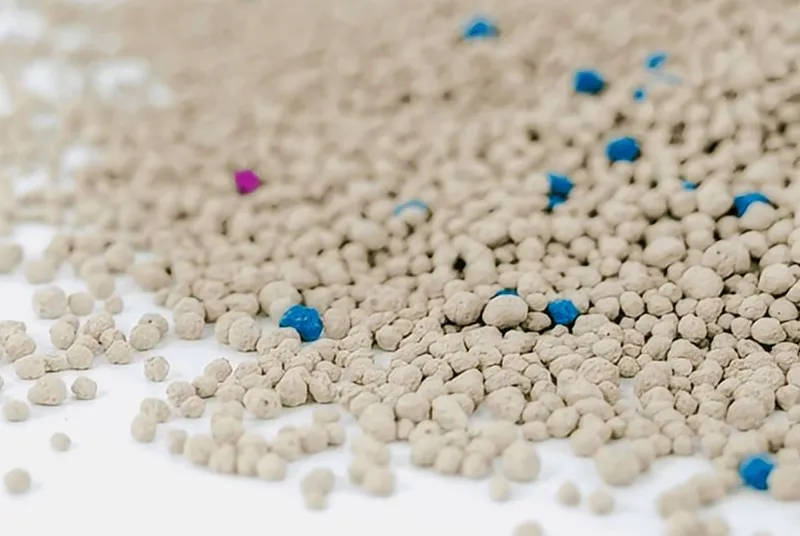
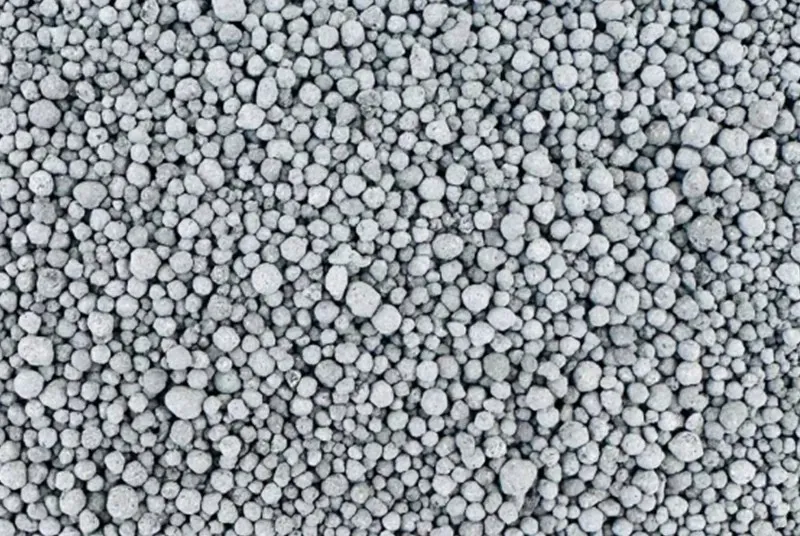
- Particle-size distribution: Fine particles usually create faster contact with liquid, while larger particles may reduce tracking but can alter texture and clumping speed.
- Litter depth: Maintaining approximately 7–10 cm, or around 3–4 inches, gives liquid enough material to form a removable clump instead of reaching the box floor.
These variables explain why two products labeled “bentonite” may behave differently. A responsible product description should identify whether the litter is sodium bentonite, whether it is scented or unscented, how dust is controlled, and what particle profile the manufacturer targets.
Premium Bentonite Cat Litter and Odor Control in Real Homes
Odor control begins with removing the source. Cat urine contains urea and other compounds that can produce a stronger ammonia-like odor as urine residues are broken down. A litter that forms a tight clump can reduce the amount of liquid left in the box, but no litter can compensate for a box that is too small, overloaded, poorly ventilated, or cleaned infrequently.
This is why “odor control” should be evaluated as a routine rather than a single feature. In a one-cat home, scooping solid waste and wet clumps at least once daily is a practical baseline. In a multi-cat home, more frequent scooping and additional boxes are often necessary. The American Association of Feline Practitioners and the International Cat Care organization both emphasize clean, accessible litter boxes and suitable box placement as important parts of feline elimination management.
Unscented Versus Scented Bentonite Cat Litter
Fragrance can make a box smell more pleasant to people, but it does not remove urine or feces. Some cats may also avoid strongly scented litter. For a household dealing with litter-box avoidance, an unscented formula is often a sensible starting point because it reduces one possible source of aversion. If a scented product is used, the owner should observe the cat’s behavior rather than assume that a stronger fragrance means better odor control.
Activated carbon or other odor-control additives may help adsorb odor molecules, but their effect depends on dosage, contact time, ventilation, and the amount of waste present. Claims should therefore be supported by a defined testing method instead of phrases such as “100% odor-free.” Petcare can strengthen consumer trust by explaining the difference between odor adsorption, moisture capture, and fragrance masking.
Low-Dust Bentonite Cat Litter for Cleaner Scooping
Dust is one of the main reasons owners hesitate to use clay litter. Dust can settle on furniture, appear around the box, and become noticeable during pouring or scooping. A low-dust formulation can reduce visible airborne particles, but “dust-free” is difficult to guarantee because handling, transport, and box movement can create fines.
Owners can reduce exposure by pouring slowly, keeping the box in a ventilated area, avoiding vigorous shaking of the bag, and washing hands after cleaning. A litter mat can capture granules before they spread through the home. Cats with asthma, chronic respiratory signs, or other medical conditions should be discussed with a veterinarian; litter selection should not replace diagnosis or treatment.
How to Judge Dust and Tracking More Objectively
Instead of relying only on a product label, compare several practical indicators:
- Pour the same mass of litter from the same height and observe visible airborne dust in consistent lighting.
- Check whether the litter breaks into powder after repeated scooping.
- Measure how many granules appear on the mat and floor after several days of normal use.
- Inspect whether clumps remain intact when lifted with a standard scoop.
These are household comparisons, not laboratory certification. A manufacturer seeking a stronger technical claim should publish its testing method, sample size, and dust measurement standard. Without those details, “low dust” should be understood as a relative product-positioning statement rather than a universal guarantee.
Clumping Bentonite Cat Litter for Multi-Cat Homes
Multi-cat homes put more pressure on every part of the litter system. More urine means faster saturation, more frequent odor production, and a greater chance that one cat will encounter a dirty box. The commonly cited “one box per cat plus one extra” guideline is associated with feline behavior recommendations from organizations such as the ASPCA and International Cat Care. It is a useful starting point, although household space and individual cat behavior still matter.
For example, if two cats share one small box, even a strong clumping formula may appear to fail because liquid accumulates faster than the owner removes it. Adding a second or third appropriately sized box can produce a larger improvement than changing from one premium litter to another. This is an important premium bentonite cat litter vs. poor litter-box management comparison: the litter is part of the solution, not the entire solution.
Reducing Tracking Without Making the Texture Uncomfortable
Fine granules can feel soft under a cat’s paws and may create compact clumps, but they can also track more easily. Larger granules may reduce some tracking while feeling different to the cat. A gradual transition is therefore safer than an abrupt replacement. Mix approximately 25% new litter with 75% old litter for several days, then increase the new proportion if the cat continues using the box normally.
A textured litter mat, a box with a stable entrance, and a location away from food and water can further reduce household mess. Avoid placing the box beside loud appliances or in a narrow area where the cat cannot turn around comfortably. Cornell Feline Health Center guidance similarly treats box size, cleanliness, location, and substrate preference as connected factors in litter-box acceptance.
Premium Bentonite Cat Litter Compared With Other Options
No litter material is ideal for every cat or household. The right comparison depends on the problem being solved.
| Litter type | Typical advantage | Common limitation | Best evaluation point |
|---|---|---|---|
| Clumping bentonite | Forms removable urine clumps and is widely accepted by cats | May create dust or tracking depending on formulation | Clump strength, dust control, and granule tracking |
| Non-clumping clay | Often familiar and simple to use | Urine may spread through the full litter bed | Replacement frequency and odor management |
| Wood or paper litter | Plant- or fiber-based material with different texture and disposal characteristics | May not form the same cohesive clump as sodium bentonite | Cat acceptance and moisture handling |
| Silica gel litter | Can absorb liquid and reduce the frequency of full changes in some routines | Texture and crystal appearance may not suit every cat | Cat preference, saturation, and disposal instructions |
“Not using bentonite” does not automatically mean a cleaner or safer home, just as using bentonite does not guarantee perfect odor control. The outcome depends on the cat’s preferences, product quality, ventilation, cleaning schedule, and safe handling. A litter change should be made gradually, especially when the cat has previously shown avoidance.
How Pet Owners Can Choose Premium Bentonite Cat Litter
Start with the household’s actual pain point. If urine sticks to the bottom of the box, prioritize clump formation and adequate litter depth. If powder appears on nearby surfaces, prioritize a tested low-dust formula and calmer pouring habits. If odor returns within hours, review the number and size of boxes, scooping frequency, ventilation, and whether urine clumps are being removed completely.
A Practical Bentonite Cat Litter Selection Checklist
- Choose a formula clearly identified as clumping sodium bentonite if removable urine clumps are the main goal.
- Look for transparent information about dust control, fragrance, additives, and particle size.
- Prefer a litter that forms a firm clump without requiring excessive depth beyond the manufacturer’s guidance.
- Use an unscented option first when introducing litter to a kitten, a sensitive cat, or a cat with previous box avoidance.
- Confirm packaging, storage, and disposal instructions before purchase.
- Transition over several days and monitor appetite, breathing, paw licking, stool, and litter-box behavior.
Do not flush clay litter unless local wastewater authorities explicitly permit it. Scoop waste into a sealed bag, keep the product dry, and prevent kittens from playing in or ingesting litter. If a cat repeatedly urinates outside the box, strains, cries, produces very little urine, or shows blood in the urine, contact a veterinarian promptly. Sudden urinary changes can indicate a medical problem rather than a litter preference issue.
What the China Eye Health Data Can—and Cannot—Show
Health statistics should not be inserted into a pet-care article as unsupported decoration. The statement that the “China Eye Health White Paper (2022)” found myopia among children aged 6–12 increased from 53.6% in 2018 to 59.1% in 2021, based on 32,000 children in 27 provinces, cannot be responsibly presented here as verified without access to the original report, methodology, sampling frame, and sponsoring institution.
For a substantiated reference, China’s National Health Commission reported in its 2021 national monitoring results that the overall myopia rate among children and adolescents aged 6–18 was 52.7%; this age range is not the same as children aged 6–12, so the figures should not be substituted for one another. In addition, there is no sound basis for claiming that bentonite cat litter prevents myopia or improves children’s eyesight. Keeping litter dust under control is sensible household hygiene, but it is not an eye-health treatment. This distinction protects readers from a misleading connection between unrelated data and pet products.
The Value of Premium Bentonite Cat Litter for Pet Brands
Pet brands favor bentonite because its user benefit is easy to demonstrate in a daily routine. A brand can show how quickly a liquid test forms a clump, how the clump performs after scooping, and how much litter remains dry around it. These demonstrations are more credible when they include the liquid volume, litter depth, waiting time, scoop type, and number of repeated tests.
For Petcare, the strongest product communication would connect technical terms with household outcomes: agglomeration explains why the clump can be lifted; cation exchange capacity helps describe the mineral’s interaction with moisture and ions; and particle-size distribution clarifies the balance between texture, dust, clumping, and tracking. None of these terms should be used as a substitute for test data, but together they help owners understand why a formulation behaves differently from ordinary non-clumping litter.
In the end, bentonite cat litter is popular not because one label solves every problem, but because it offers a practical combination of cat acceptance, removable urine clumps, familiar texture, and a cleaning process that can be measured at home. When owners match the product to the cat, maintain enough boxes, scoop consistently, and control dust through both formulation and handling, the litter box becomes easier to manage. Petcare can be a useful starting point for comparing premium bentonite cat litter, checking product specifications, and trying a gradual transition that respects the cat’s preferences.