What Is Tofu Cat Litter? A Complete Guide to Plant Based Cat Litter
Nov. 02, 2026
Share:
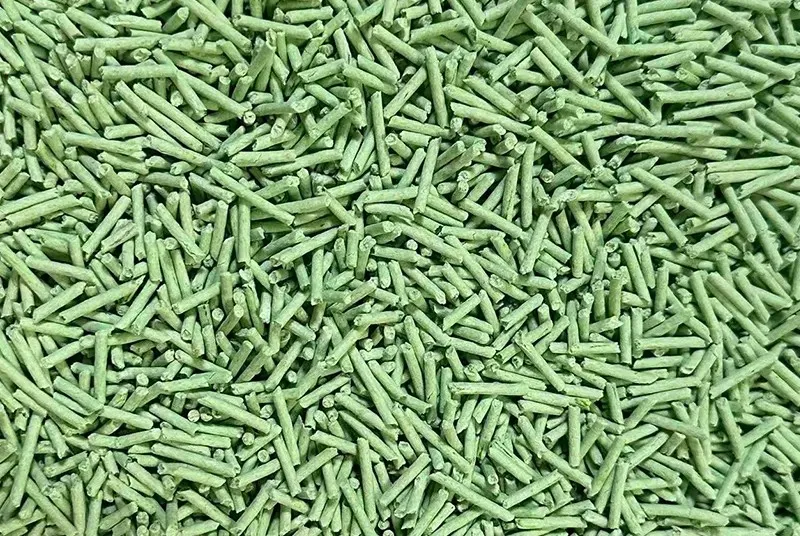
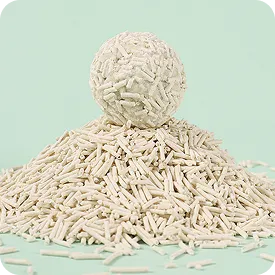
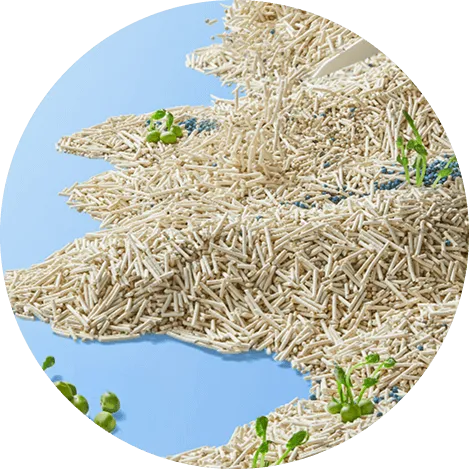
Tofu cat litter is a plant-based litter made mainly from soybean residue, also called soybean fiber or okara, that is processed into absorbent granules or pellets. In practical use, it absorbs urine, forms clumps for easy removal, and helps control odor. For Petcare brands, tofu based cat litter provides a renewable product option, supports premium positioning, and can meet growing consumer demand for low-dust, biodegradable-style cat litter when its ingredients and disposal instructions are clearly verified.
Although it is called “tofu” litter, it is not made from finished tofu placed directly in a litter box. Manufacturers typically recover soybean by-products, dry them, mill them, mix them with suitable plant-based binders, shape them through an extrusion process, and remove excess moisture. The finished product must then be tested for moisture content, granule integrity, dust, absorption, clumping performance, and odor control.

The production process explains why this litter is different from traditional mineral litter. A quality-controlled manufacturing line usually follows these steps:
Granule geometry matters. Fine particles may improve clumping speed but can increase tracking and dust. Larger pellets may reduce tracking but can feel less familiar to some cats. A professional supplier should define a particle-size range and use calibrated sieves or particle-size analysis rather than relying only on visual inspection.
The cat litter industry has traditionally relied heavily on bentonite clay and silica-based products. These materials can offer strong absorption, but consumers and retailers increasingly look for renewable raw materials, lighter shipping weight, reduced dust, and more transparent disposal guidance.
Tofu based cat litter emerged as one response to these market trends. It uses a by-product from food processing, gives manufacturers an additional use for plant fiber, and generally produces lightweight granules. The category is particularly attractive to:
However, “plant based” does not automatically mean compostable, flushable, or suitable for every waste system. Product performance and end-of-life instructions must be assessed separately.
Plant fiber contains porous structures that can absorb liquid. When the granules are formulated correctly, urine binds with the material and forms a removable clump. Clump strength is important because weak clumps break apart during scooping, leaving contaminated particles in the box.
A practical starting depth is approximately 5–7 cm. This gives the litter enough material to absorb liquid before it reaches the bottom of the tray. Owners should remove urine clumps and feces at least once daily and top up the litter as needed.
Odor control depends on several factors:
Unscented tofu litter may be preferable for cats that avoid strong fragrances. A scented formula may appeal to some households, but fragrance can also cause aversion or irritation in sensitive animals. Pet owners should observe behavior rather than assuming that stronger fragrance means better odor control.
Dust is influenced by drying conditions, pellet hardness, transport vibration, and screening efficiency. No loose litter should be described as absolutely dust-free without validated test data. A responsible specification should state the test method, sampling quantity, and acceptance limit.
| Litter type | Main material | Typical strengths | Important considerations |
|---|---|---|---|
| Tofu based cat litter | Soybean fiber or okara | Lightweight, plant-based, generally clumping | May track; disposal rules vary by location |
| Bentonite clay | Sodium or calcium bentonite | Strong clumping and widespread availability | Heavier and mineral-based; dust varies by grade |
| Silica crystal | Amorphous silica gel | High liquid capacity and long service life | Non-clumping in many formulas; texture preference varies |
| Wood or paper litter | Wood fiber or recycled paper | Renewable or recycled material options | Absorption and clumping depend strongly on formulation |
The best choice is not determined by material alone. It depends on the cat’s preference, household odor requirements, dust sensitivity, waste-disposal system, and the manufacturer’s quality controls.
Not necessarily. Some formulas contain mineral additives, synthetic binders, fragrances, or packaging components that affect compostability. In addition, local composting facilities may not accept animal waste because of pathogens or parasite concerns.
ASTM D6400 and DIN EN 13432 are commonly referenced standards for industrially compostable plastic packaging and similar products. They do not automatically certify a loose cat litter as compostable. A supplier should provide a product-specific declaration, test report, or certification from a recognized laboratory before making a compostability claim.
Flushability depends on pellet expansion, plumbing design, wastewater regulations, and municipal policy. Even a product that disperses in water may contribute to blockages or may not be accepted by a septic system. The safest practice is to follow the package instructions and local wastewater guidance.
Plant-based materials can still produce dust or cause sensitivity. Cats and people may react to fragrance, botanical additives, mold contamination, or fine particulate matter. Introduce new litter gradually and stop use if a cat develops respiratory, skin, or behavioral symptoms.
Fragrance can mask odor temporarily, but it does not replace rapid absorption, daily scooping, correct litter depth, or regular tray washing. Performance should be evaluated using measurable criteria such as absorption capacity, clump integrity, dust level, and odor-control duration.
Whether you are a pet owner, distributor, or Petcare product manager, use a documented evaluation process rather than judging only by packaging.
Relevant quality systems may include ISO 9001 for quality management, ISO 2859-1 for statistical sampling procedures, and ASTM or DIN methods where they are technically applicable. These references should be used accurately: a standard test result is not the same as a broad product certification.
Consider a household with two cats using a traditional clay litter. The owner wants a lighter product but is concerned about refusal and tracking. A sensible transition plan would be:
This is a practical evaluation rather than a guarantee. If either cat avoids the box, urinates elsewhere, or shows respiratory discomfort, return to the previous formula and consult a veterinarian when appropriate.
For manufacturers and distributors, tofu litter is more than a material substitution. It can support a broader product strategy based on sustainability communication, lightweight logistics, and functional differentiation.
A strong Petcare product page should explain:
Businesses should avoid unsupported claims such as “100% biodegradable,” “completely dust-free,” or “safe to flush everywhere.” Clear limitations build more trust than exaggerated environmental language. Product claims should be supported by laboratory data, technical documentation, and applicable regional regulations.
Quality tofu cat litter is generally designed for normal feline use, but individual sensitivity varies. Choose a product with transparent ingredients, low dust, and no unnecessary fragrance. Never use litter that shows mold, chemical odor, or damaged packaging.
It can control odor effectively when it absorbs urine quickly and clumps firmly. Daily scooping and proper ventilation remain essential. Odor performance differs between formulas, so independent testing or real-world trial results are useful.
Do not assume it can. Follow the manufacturer’s instructions and local waste rules. Animal waste is often excluded from household compost, even when the litter material itself is plant-based.
Usage depends on the number of cats, tray size, litter depth, clumping efficiency, and cleaning schedule. A single-cat home may use less than a multi-cat home, but the package’s recommended replacement frequency should be treated as a starting point rather than a universal guarantee.
What Is Tofu Cat Litter? A Complete Guide to Plant Based Cat Litter can be summarized in five points:
For households, the best next step is to test a small bag and monitor acceptance, tracking, dust, and odor. For retailers and manufacturers, the next step is to request technical specifications, laboratory data, packaging controls, and reliable after-sales support before approving a tofu based cat litter product.
Latest Blog / Insights
Hot Products


Let’s Get Started on Your Cat Litter Journey.