Tofu Cat Litter vs Clay Cat Litter: Key Differences Explained
Nov. 17, 2026
Share:

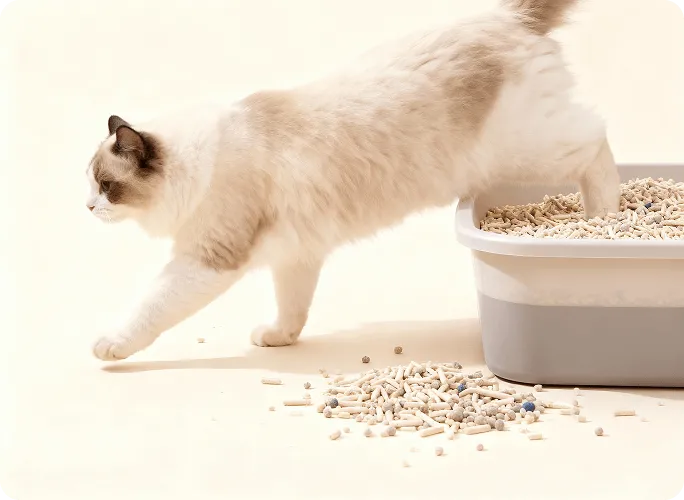
Tofu cat litter vs clay cat litter is a common choice for cat owners who want better odor control, easy cleaning, and a safe litter box. Clumping cat litter can make daily scooping faster, but the type of material affects dust, waste handling, and cost. Many owners also compare natural cat litter with traditional mineral products. Tofu litter is made from plant fiber, while most clay litter is made from bentonite or other mined minerals. Dust control can differ between brands because particle size, drying, and screening affect the final product. Some families also look for biodegradable cat litter because they want to reduce household waste. This guide compares the two types by performance, safety, price, environmental impact, and quality control.
Tofu cat litter is usually the better choice for owners who want a lightweight, plant-based, low-dust product with a renewable raw material. Clay cat litter is often the better choice for owners who want strong clumping, broad availability, and a lower purchase price. Tofu litter can produce long, firm clumps and may be easier to carry, but it can cost more per kilogram and may need careful storage. Clay litter often controls odor well and forms hard clumps, but it is heavier, mined, and may create more dust. The best choice depends on your cat's health, your cleaning routine, your budget, and local waste rules.
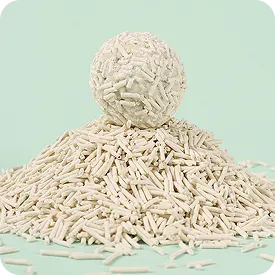
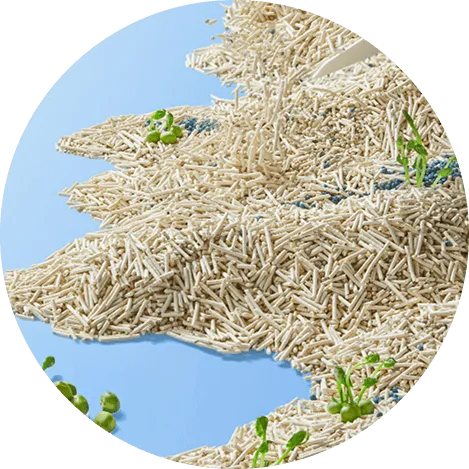
Tofu cat litter is usually made from soybean fiber, pea fiber, corn starch, or other plant-based materials. The plant fiber is dried, ground, mixed with a binding agent, and formed into pellets or small granules. Some products also contain activated carbon, tea fiber, or a plant-based odor absorber.
Most tofu litter uses particles between about 1.5 and 4 millimeters in diameter. Smaller particles can feel softer under a cat's paws. Larger pellets may track less but can be less comfortable for some cats.
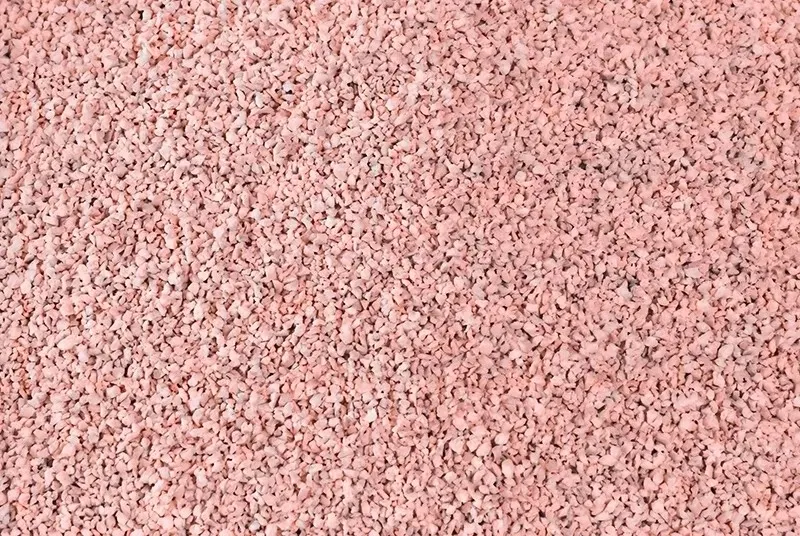
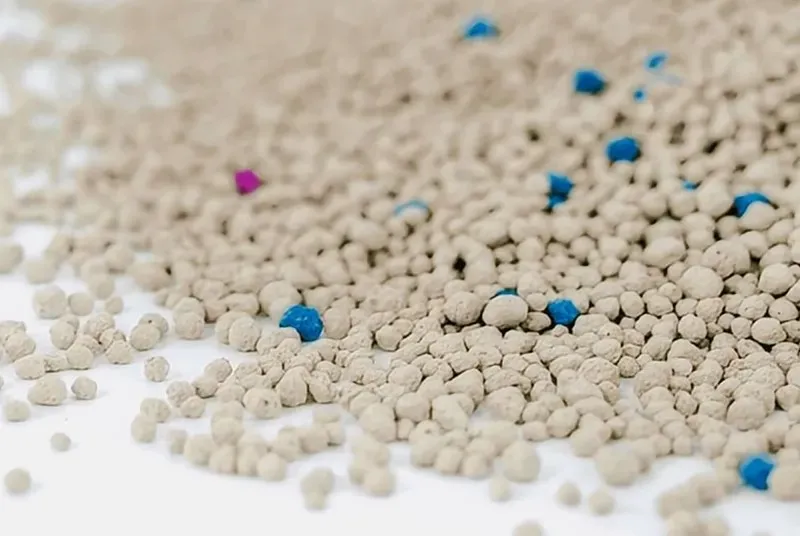
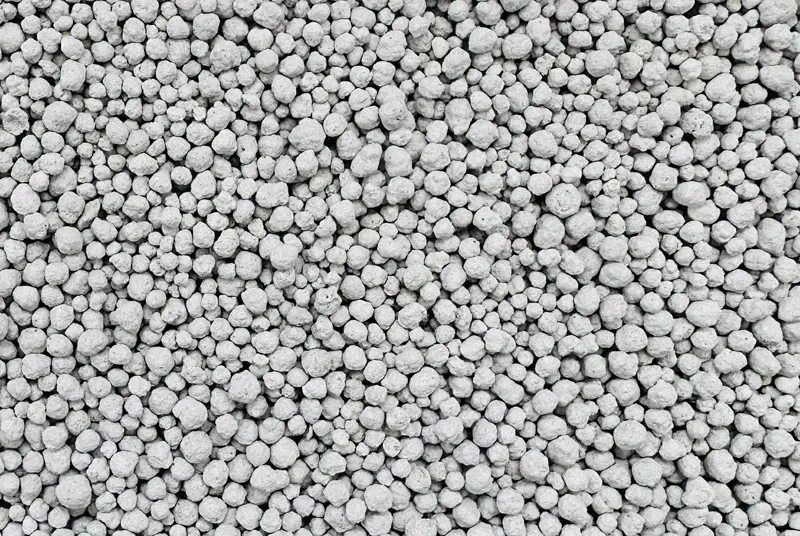
Clay cat litter is commonly made from sodium bentonite clay. Sodium bentonite expands when it contacts liquid. This property helps the litter form a solid clump around urine. Non-clumping clay products may use other clay minerals and absorb liquid without forming a scoopable mass.
Clay granules often measure between 0.5 and 3 millimeters. Fine granules can offer a sand-like texture. However, they may also increase tracking and airborne dust if the product is not screened and processed correctly.
| Feature | Tofu Cat Litter | Clay Cat Litter |
|---|---|---|
| Main material | Plant fiber, often soybean or pea fiber | Mineral clay, often sodium bentonite |
| Typical particle size | About 1.5 to 4 mm | About 0.5 to 3 mm |
| Clumping speed | Often forms a clump within 5 to 15 seconds | Often forms a clump within 3 to 10 seconds |
| Clump strength | Good when the formula has enough binder and moisture control | Usually very strong because bentonite expands and binds |
| Dust potential | Can be low when fines are screened below 0.5 percent | Can range from low to high depending on mining and screening |
| Weight | Often 30 to 50 percent lighter by volume than clay | Usually denser and heavier to carry |
| Odor control | Uses absorption, plant fiber, and optional carbon | Uses absorption, mineral action, and optional fragrance or carbon |
| Renewable content | Usually made from renewable plant material | Made from mined mineral material |
| Disposal | Some products may be compostable or flushable under local rules | Usually placed in household waste |
| Typical cost | Often higher per kilogram | Often lower per kilogram |
The figures in this table are common production ranges, not a guarantee for every brand. Packaging, formulation, equipment, and testing methods can change the result.
Tofu litter absorbs urine through plant fiber and starch. The material can form a long clump that is easy to remove from the litter box. A well-made product should limit crumbling during scooping.
A practical test is to add 40 milliliters of water to 100 grams of litter. Wait 10 minutes. Lift the clump with a scoop and record whether it stays together. A useful product target is at least 90 percent clump recovery by weight after one scoop. This means most of the wet material remains in the scoop instead of breaking apart.
Clay litter usually absorbs liquid quickly. Sodium bentonite swells and locks the liquid into a dense mass. This can reduce wet spots at the bottom of the box when the litter depth reaches about 6 to 8 centimeters.
Clay often produces harder clumps than tofu litter. However, hard clumps do not always mean better value. If the litter forms a large wet mass around a small amount of urine, more clean litter may be removed during scooping.
Testing three samples gives a more reliable result than judging one clump. Petcare product teams can also test clump strength after 30 minutes and 24 hours to measure how the product performs when scooping is delayed.
Plant fiber absorbs urine, but absorption alone does not remove every odor. Some tofu products add activated carbon or mineral odor absorbers. The formula must also control moisture because damp litter can develop a strong smell.
One useful laboratory method is an ammonia chamber test. A sample is placed in a sealed container with a controlled ammonia source. The ammonia level is measured at fixed times, such as 30 minutes, 2 hours, and 24 hours. Testing at least three batches helps show whether odor performance is consistent.
Clay litter can provide strong odor control because it absorbs liquid quickly and creates a sealed clump. Some products include fragrance. Fragrance may cover odor, but it does not always remove the source. Strong scents can also bother cats or people with sensitive airways.
For both types, daily waste removal is important. A litter box should usually be scooped at least once per day. Homes with several cats may need two or more cleaning sessions daily.
Dust comes mainly from very small particles and broken granules. A product can be labeled low dust, but actual performance depends on testing. A common quality target is less than 0.5 percent particles below 75 micrometers after normal handling. The exact test method should be stated because different screens and air-flow settings produce different results.
Manufacturers can use vibrating screens, air separators, and dust collectors to remove fines. A production line may check dust at the filling stage and again after transport simulation. Ten minutes of vibration can show whether pellets break during shipping.
Fine clay particles may stick to paws and travel outside the box. Tofu pellets are often larger and lighter, but broken plant pellets can also track. A litter mat placed outside the box can reduce the amount of litter carried into other rooms.
Cats often prefer a clean box with a familiar texture. A sudden change can cause avoidance. When changing products, mix the new litter with the old litter over seven days. Watch for changes in urination, defecation, or box use. If a cat stops using the box, contact a veterinarian because this may signal a health problem.
Tofu litter is generally made from plant fiber and does not contain mined clay as its main ingredient. It should still be stored in a dry place. Moisture can cause early clumping, mold growth, or loss of odor performance.
Choose products with clear ingredient information. Avoid products with heavy fragrance if your cat has asthma, allergies, or a strong reaction to scented materials.
Clay litter is widely used and can be safe when handled correctly. Dust may irritate the nose and airways of some cats and people. Pour the product slowly and keep the bag close to the box to reduce airborne particles.
Pregnant people and individuals with weak immune systems should wash their hands after cleaning a litter box. Daily removal of feces reduces exposure to harmful organisms. Follow medical advice for personal health concerns.
A responsible litter quality program can include the following checks:
For plant-based litter, a moisture target between 6 and 10 percent can help balance clumping and storage stability. The correct range depends on the formula. Each factory should validate its own specification rather than copy a number from another product.
Tofu litter uses renewable plant material. Some products are biodegradable under suitable conditions. However, biodegradable does not always mean that the product should be flushed. Plumbing systems, local wastewater rules, and parasite risks vary by location.
Place used litter in a sealed bag unless the packaging and local authority clearly allow another method. Do not compost cat waste with food-garden compost. Home compost may not reach the temperature needed to control pathogens.
Clay litter is made from mined minerals. Used clay litter is usually disposed of with household waste. It does not break down in the same way as plant fiber. Clay is also dense, so a household can move a large amount of material over a month.
Environmental impact includes more than the raw material. Packaging weight, transport distance, production energy, and product life also matter. A lightweight tofu product may reduce transport weight, but the total impact depends on the full supply chain.
| Cost factor | Tofu litter | Clay litter |
|---|---|---|
| Purchase price per kilogram | Often higher | Often lower |
| Bag handling | Usually easier because of lower density | Heavier for the same volume |
| Scooping waste | Can be efficient if clumps stay firm | Can be efficient because clumps are hard |
| Storage risk | Must be protected from humidity | Less sensitive to normal dry storage |
| Long-term value | Depends on absorption and waste rate | Depends on price and amount discarded |
For example, a 10 kilogram bag that costs 20 dollars has a price of 2 dollars per kilogram. If a household uses 1.5 kilograms per week, the estimated monthly material cost is about 12.90 dollars. The same calculation should be used for both tofu and clay products.
A gradual transition can reduce litter box refusal. Follow this process:
Do not change the litter during a stressful event if it can be avoided. Moving house, adding a new pet, or changing feeding times can already affect box behavior.
| Your priority | More suitable option | Reason |
|---|---|---|
| Lower purchase cost | Clay cat litter | Usually lower price per kilogram |
| Plant-based material | Tofu cat litter | Made mainly from renewable fiber |
| Strong clumping | Clay cat litter | Bentonite often creates dense clumps |
| Lower carrying weight | Tofu cat litter | Often has lower bulk density |
| Low fragrance | Either type | Choose an unscented formula |
| Reduced dust | Either type with test data | Processing quality matters more than material alone |
Read the package instead of relying only on front-label claims. Look for the main ingredient, particle size, fragrance information, storage instructions, and disposal guidance. A reliable product should provide a batch number and a clear manufacturing date or shelf-life statement.
For tofu litter, check whether the bag is sealed against moisture. For clay litter, check whether the product reports dust control or uses a dust-free processing claim supported by a test method. Also compare the net weight and estimated usage. A larger bag is not always cheaper if it creates more waste during scooping.
Petcare buyers and retailers can request a specification sheet that includes moisture, bulk density, particle distribution, dust level, absorption rate, and clump strength. A practical release plan may test five bags from each production batch and place one retained sample in storage for later review. This helps identify changes in raw materials or machine settings.
Tofu cat litter vs clay cat litter is not a simple winner-versus-loser decision. Tofu cat litter offers plant-based material, lower carrying weight, and possible biodegradable disposal. Clay cat litter offers strong clumping, reliable absorption, and a lower purchase price in many markets. Dust, odor control, tracking, and clump strength depend on both the raw material and the manufacturing process. Compare test data, follow local disposal rules, and introduce any new litter gradually. The best cat litter is the one your cat accepts, fits your budget, and supports a clean and safe daily routine.
Latest Blog / Insights
Hot Products


Let’s Get Started on Your Cat Litter Journey.