How to Start Your Own Cat Litter Brand with OEM Manufacturing
Nov. 20, 2026
Share:
To learn how to start a cat litter brand with OEM, you need more than a logo and a bulk order: you need a validated formula, a compliant private label cat litter manufacturer, and custom cat litter packaging that protects the product in storage and shipping. The core decisions are litter type, clumping performance, odor control, dust management, and documentation such as an SDS, particle-size specification, and batch record. This guide explains how to turn those requirements into a practical Petcare brand launch.

Most new brands do not fail because customers cannot find cat litter. They fail because the product does not solve a clearly defined household problem. A multi-cat home may need stronger urine-clump integrity; an apartment customer may prioritize dust control and package weight; a sustainability-focused buyer may want a plant-based substrate but still expect reliable odor management.
A successful OEM cat litter project therefore begins with a narrow customer promise. For example, Petcare could position one product for fragrance-free apartment users, another for multi-cat households, and a third for customers seeking a plant-based litter. Each product should have its own specification rather than one formula carrying several unsupported claims.
Before contacting factories, select the substrate and the performance mechanism. Common options include:
| Product type | Typical material basis | Key technical questions | Commercial positioning |
|---|---|---|---|
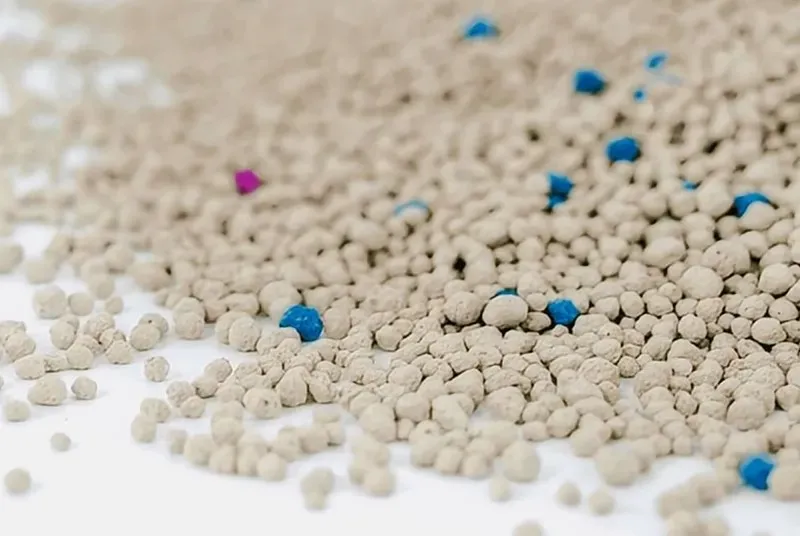
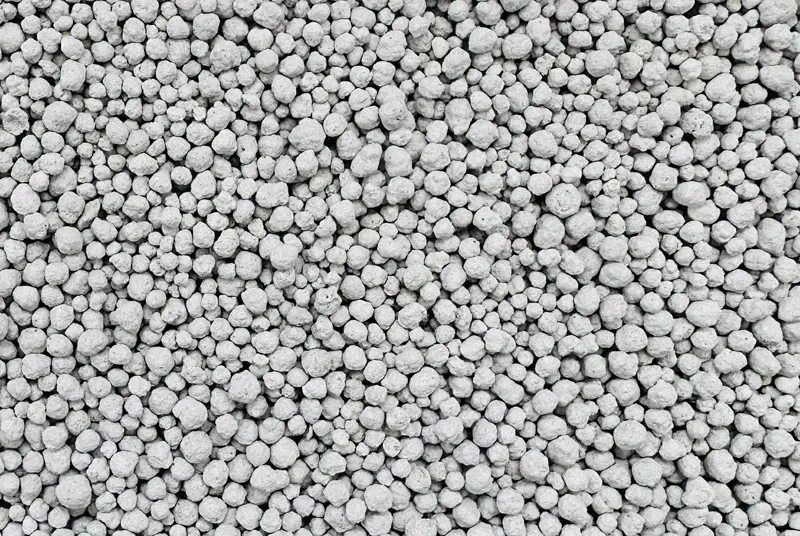
| Bentonite clumping litter | Sodium or calcium bentonite, sometimes blended with additives | Clump integrity, swelling behavior, particle-size distribution, dust level | Daily-use and multi-cat products |
| Silica crystal litter | Amorphous silica gel granules | Absorption capacity, crystal size, breakage, dust, disposal instructions | Low-frequency scooping and lightweight formats |
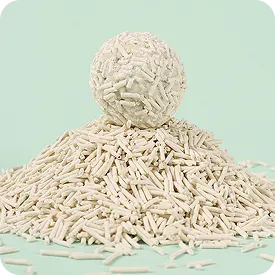
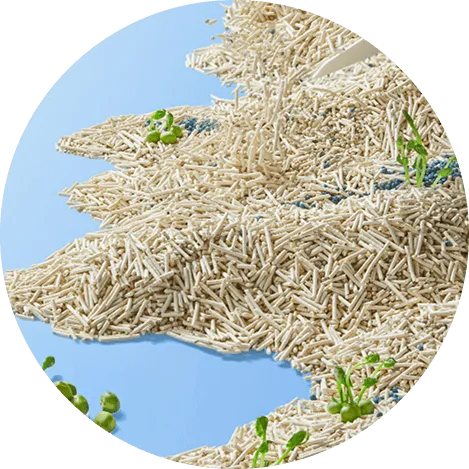
| Wood-based litter | Wood pellets, fibers, or processed plant material | Moisture content, pellet durability, odor behavior, biological contamination controls | Plant-based or renewable-material positioning |
| Corn, wheat, or other plant-based litter | Processed agricultural starch or fiber | Clumping speed, moisture stability, pest control, microbial quality | Alternative-material and sustainability positioning |
Do not select a substrate solely because it is inexpensive. A lower raw-material price can be offset by higher breakage, poor clumping, more returns, or expensive packaging. Request a full formula description, ingredient function, country of origin, and known allergen or contamination risks before approving samples.
A specification sheet converts a subjective request such as “premium low-dust litter” into measurable requirements. Include:
Use “target,” “minimum,” and “maximum” correctly. For example, a target particle range is not the same as a guaranteed specification. Your OEM supplier should confirm which values can be controlled consistently at commercial scale.
Tools: Customer interviews, marketplace review records, a competitor comparison spreadsheet, and a product-positioning worksheet.
Action: Select one primary use case, such as single-cat apartment living, multi-cat households, fragrance-sensitive owners, automatic litter-box users, or plant-based purchasing.
Parameters: Write one primary benefit, three measurable supporting requirements, the intended pack size, sales channel, target country, and acceptable retail price. Avoid combining incompatible promises such as “maximum clumping,” “flushable,” and “zero dust” before technical validation.
Check: Ask at least several potential buyers to rank the proposed benefits and explain their current litter frustrations. Record the exact problem language rather than converting every comment into a marketing claim.
Failure fix: If customers choose different benefits, split the concept into separate product briefs. Do not ask one formula to serve fragrance-free, ultra-lightweight, plant-based, premium-clumping, and automatic-box users without testing each requirement.
Tools: Supplier questionnaire, business-registration search, factory-audit checklist, and sample-request form.
Action: Contact manufacturers that can produce the selected substrate and packaging format. Ask whether they are an actual producer, a trading company, or a hybrid operation. Request factory address, production capabilities, minimum order quantity, lead time, export markets, and quality certifications.
Parameters: Require written answers about raw-material sourcing, batch traceability, incoming inspection, in-process screening, finished-goods release, retained samples, complaint handling, and change-control procedures.
Check: Compare the supplier’s answers with its documents. An ISO 9001 certificate, for example, indicates a quality-management system; it does not automatically prove that the litter is low-dust, safe for every cat, or superior to competing products.
Failure fix: Reject suppliers that will not disclose the ingredient function, cannot provide an SDS where required, refuse batch samples, or promise performance without defining a test method.
Tools: Sample labels, sealed containers, evaluation spreadsheet, and version-control log.
Action: Request samples from more than one supplier or more than one formula version. Label every sample with supplier, date, formula code, lot number, package weight, and storage condition.
Parameters: Keep the same tray size, litter depth, test duration, scoop type, and weighing method for all comparisons. The test method should be written before the sample is opened.
Check: Inspect granule appearance, foreign material, odor, packaging integrity, fines at the bottom of the bag, and consistency between samples. Weigh the contents if the supplier has made a net-weight claim.
Failure fix: If samples differ but have the same formula code, place the project on hold and request a batch investigation. A supplier should be able to identify whether the difference came from raw materials, screening, blending, storage, or transport.
Tools: Clean trays, calibrated scale, sieve equipment or laboratory service, observation forms, and optional third-party testing.
Action: Test clumping with a consistent liquid volume and a defined contact period. After the stated period, lift the clump with the same scoop and document breakage, sticking, residue, and time required for removal.
Parameters: Establish your own pass criteria before testing. A valid specification might define allowable clump breakage, maximum residue, and acceptable variance between replicate samples. Do not publish a “99% odor reduction” or “zero dust” claim unless a defensible test supports it.
Check: Repeat the test across multiple portions and, for a serious launch, use an independent laboratory for moisture, particle size, dust, and microbiological testing where applicable. Consumer testing can assess perceived odor, tracking, and ease of scooping, but it should not replace laboratory safety or composition testing.
Failure fix: If clumps break, investigate bentonite grade, granule size, additive dosage, liquid contact time, and packing pressure. If dust is high, investigate crushing, screening, fines removal, bag abrasion, and transport vibration rather than simply adding a “low-dust” statement.
Tools: Veterinary or animal-behavior guidance, clean test trays, written consent forms, observation sheets, and a complaint-escalation plan.
Action: Use gradual product introduction in real homes. Do not force a cat to use an unfamiliar litter, remove every familiar option immediately, or test a product on cats with urinary, respiratory, or other medical conditions without veterinary advice.
Parameters: Record litter-box approach, digging, elimination, covering behavior, tracking, dust noticed by the owner, and any avoidance. The test should also document the cat’s existing litter, tray type, cleaning routine, and household changes.
Check: Separate cat preference from owner perception. A cat may accept a litter while the owner dislikes tracking; the reverse can also occur. Treat vomiting, coughing, breathing difficulty, skin irritation, or litter-box avoidance as a reason to stop the test and seek veterinary advice.
Failure fix: If acceptance is poor, review granule size, fragrance, texture, dust, tray depth, and transition instructions. Do not assume that adding perfume solves avoidance; fragrance can be a negative factor for some cats and owners.
Tools: Packaging dieline, seal-strength test or supplier test report, compression and drop-test plan, barcode verifier, and artwork checklist.
Action: Select a bag, pouch, box, or recyclable structure that fits the product’s density and shipping route. Confirm whether the package is moisture-resistant and whether its seal remains intact after filling and handling.
Parameters: Specify net weight, fill tolerance, package dimensions, seal width, handle load requirement, carton quantity, pallet pattern, lot-code position, and storage conditions. The OEM should confirm the actual filling tolerance rather than copying a nominal weight into the artwork.
Check: Inspect filled units after transport simulation or representative handling. Check leaking seams, pinholes, delamination, crushed cartons, unreadable lot codes, barcode scans, and label adhesion.
Failure fix: If bags fail, adjust film structure, seal temperature, seal width, filling speed, carton protection, or pallet configuration. Do not approve artwork until the final material structure and package dimensions are confirmed.
Tools: Regulatory checklist, SDS review, label-claim substantiation file, laboratory reports, and local importer or legal counsel.
Action: Review the product for the destination market. Depending on the formulation and jurisdiction, this may involve chemical classification, GHS or CLP hazard communication, packaging rules, environmental claims, biocide restrictions, customs documentation, and language requirements.
Parameters: Keep the formula, raw-material specifications, SDS, certificate of analysis, microbiological results where relevant, packaging artwork, batch records, and claim evidence in one controlled file.
Check: Verify every claim word by word. “Fragrance-free,” “natural,” “flushable,” “biodegradable,” “hypoallergenic,” “non-toxic,” and “safe for kittens” can create different substantiation or regulatory obligations. Product safety claims should be reviewed for the specific market and formulation.
Failure fix: Replace unsupported superlatives with precise descriptions. For example, state the substrate and test method instead of saying “the world’s best litter.” If a claim cannot be supported by a repeatable test or reliable documentation, remove it.
Tools: Purchase order, approved golden sample, inspection checklist, batch-release form, and corrective-action template.
Action: Start with a pilot order that is large enough to test filling, packaging, logistics, and customer response but small enough to limit exposure if the formula needs revision. Define who pays for rework, replacement, inspection, and nonconforming goods.
Parameters: Include product code, formula version, approved artwork version, net weight, tolerances, packaging structure, carton configuration, delivery terms, inspection point, sampling plan, and rejection procedure.
Check: Inspect pre-production samples, first-off packaging, production units, carton markings, and retained samples. Confirm that the lot code links the shipment to raw materials, production date, and quality-release records.
Failure fix: Quarantine nonconforming stock. Record the defect, affected lots, quantity, probable cause, immediate containment, corrective action, and verification result. Never blend rejected stock into approved inventory without a documented rework decision.
Published feline-behavior guidance consistently emphasizes that litter-box acceptance depends on factors including cleanliness, box location, substrate preference, and gradual changes. Research and veterinary education therefore support a practical conclusion: a litter brand should not judge success only by laboratory absorption. The cat must willingly use the box, and the owner must be able to maintain it.
One useful evidence-based example comes from the documented history of corn-based cat litter sold under the World’s Best Cat Litter brand. The company describes its product as made from whole-kernel corn and built around a plant-based clumping approach. This is a public company case, not an independent guarantee that every corn formula performs identically. For an OEM project, the lesson is narrower and more useful: a material story becomes commercially meaningful only when it is connected to a repeatable product function, clear disposal instructions, and evidence for the claims made on the package.
Independent guidance from organizations such as International Cat Care and veterinary behavior specialists also warns against treating litter-box problems as simple “bad behavior.” A cat that avoids the box may have a medical condition, aversion to the litter, a dirty box, or environmental stress. Therefore, Petcare packaging should give transition and cleaning instructions without presenting the product as a treatment for urinary disease or other medical problems.
Why it happens: A factory offers an attractive price and a ready-made package.
Solution: Issue the specification sheet first. Compare suppliers on formula control, testing, traceability, packaging quality, and total delivered cost—not only on the price per bag.
Why it happens: Dust is visible during pouring, but brands often lack a defined test method.
Solution: Define what is being measured, at which production stage, with which equipment, and under what conditions. Consider separate evaluation of loose fines, airborne dust, and dust created by transport abrasion.
Why it happens: Fragrance can make a sample smell better immediately.
Solution: First investigate urine absorption, clump removal, tray cleaning, ventilation, and additive compatibility. Offer a fragrance-free version if your customer research shows sensitivity or preference for unscented products.
Why it happens: Similar wording appears across online marketplaces.
Solution: Treat every claim as a separate compliance task. Obtain evidence for your own formula and market. A competitor’s claim is not evidence for your product.
Why it happens: Samples are tested indoors, while commercial goods may travel through humid warehouses and multiple handling points.
Solution: Evaluate package barrier performance, pallet wrapping, carton protection, storage conditions, and changes in clumping after representative transport. Plant-based materials require particular attention to moisture and biological quality.
Why it happens: Larger orders often reduce the unit price.
Solution: Calculate the cost of failure, including storage, disposal, relabeling, returns, and lost launch time. Approve a pilot only after the specification, artwork, and quality plan are signed off.
Calculate landed cost rather than factory price alone. The model should include:
Use a sensitivity table with changes in freight, packaging, raw-material price, and return rate. A product with a lower ex-factory quote may have a higher landed cost if it requires heavier packaging, produces more breakage, or occupies more warehouse volume.
The safest route to launching Petcare or any other cat-litter brand is to treat OEM manufacturing as a controlled product-development process. Start with a customer problem, define the material and performance requirements, test the formula under repeatable conditions, verify packaging, and document the evidence behind every claim.
Do not promise “perfect odor control,” “zero dust,” or universal cat acceptance without a test method and market-specific review. A credible brand can say what the product contains, how it was tested, how to transition a cat safely, how to store and dispose of it, and what the manufacturer will do when a batch fails inspection. That level of transparency is more durable than a short-term marketing slogan and gives your private label cat litter manufacturer a clear standard to reproduce at commercial scale.
Latest Blog / Insights
Hot Products


Let’s Get Started on Your Cat Litter Journey.