How to Choose the Right Cat Litter for Your Pet Store Business
Nov. 24, 2026
Share:
If you are searching for How to Choose the Right Cat Litter for Your Pet Store Business, I recommend using a simple five-step process: identify your customers, match the litter type to their needs, verify supplier quality, calculate landed cost, and test the product in a controlled market launch. This approach helps us reduce slow-moving inventory, improve repeat purchases, and select a reliable cat litter supplier without making decisions based only on price.
Cat litter is a high-frequency consumable. Customers typically repurchase it every few weeks, which makes it an important category for customer retention and recurring revenue.
However, the wrong product can create several business problems:
At Petcare, we approach cat litter selection as a combination of product performance, retail positioning, quality assurance, and supply-chain efficiency. The best litter is not necessarily the cheapest option. It is the product that delivers consistent value for a clearly defined customer group.
!
Before contacting a cat litter supplier, divide your customers into practical segments. Each segment has different purchasing priorities.
| Customer Segment | Main Requirement | Suitable Cat Litter |
|---|---|---|
| Budget-conscious households | Low price and acceptable performance | Standard bentonite litter |
| Multi-cat households | Strong clumping and odor control | Premium clumping bentonite |
| Eco-conscious consumers | Renewable or biodegradable materials | Tofu, corn, cassava, or pine litter |
| Apartment residents | Low dust and strong odor management | Fine-grain clumping or activated-carbon litter |
| Kittens and sensitive cats | Gentle material and low fragrance | Unscented, low-dust litter |
| Premium pet owners | Convenience and appearance | High-performance tofu or hybrid litter |
We should also review the sales data from your current Petcare category:
If your store serves several customer groups, avoid launching too many products at once. A practical starting range is three to five SKUs: one economical product, one premium product, one natural product, and one multi-cat solution.
The material determines the product’s performance, cost structure, environmental positioning, and shipping characteristics.
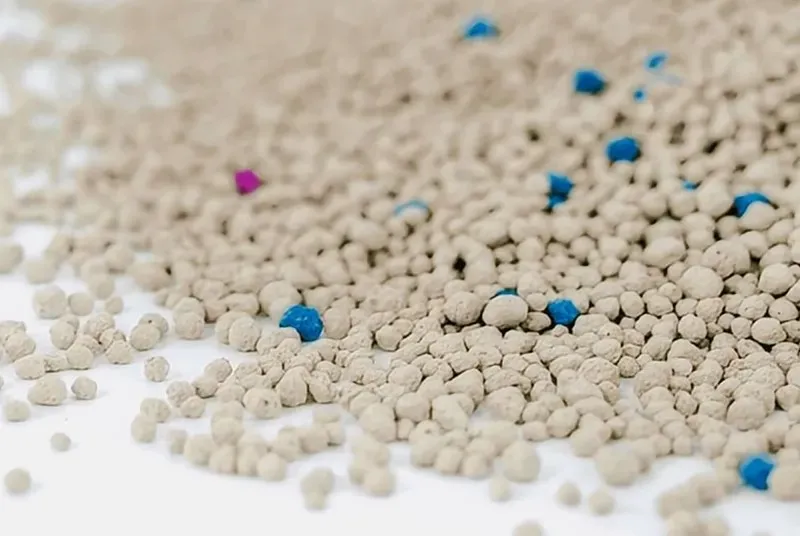
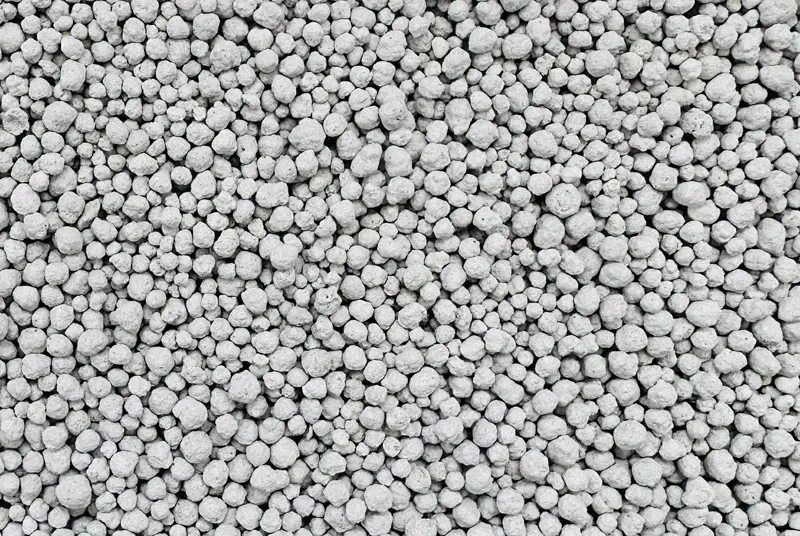
Bentonite is widely used because of its strong clumping capability and mineral-based odor absorption.
Key specifications to review include:
For retail consistency, request a granule-size specification such as 0.5–2.5 mm or another range suitable for the product positioning. A laboratory can measure particle distribution with test precision to 0.01 mm, helping us identify excessive fines or oversized particles.
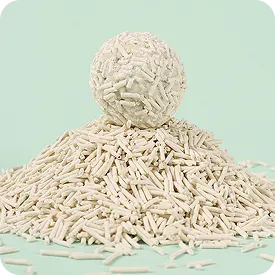
Tofu litter is attractive to customers seeking renewable and biodegradable materials. It is usually lightweight, flushable only where local regulations and plumbing conditions permit, and available in natural or scented versions.
When evaluating tofu litter, inspect:
Do not print “flushable” or “compostable” on packaging unless the claim has been verified for the destination market and supported by appropriate test documentation.
Silica gel crystals provide strong liquid absorption and long service life. They are often positioned as a low-maintenance premium product.
Important checkpoints include:
Silica products require particularly effective packaging because moisture exposure can reduce performance before the product reaches the consumer.
Natural litters can help retailers build an eco-focused product line. However, raw-material variation may affect color, odor, density, and absorption.
We should request batch specifications and compare at least three production lots before approving a long-term order.
A professional purchasing process should include more than a visual inspection. Petcare retailers should ask the cat litter supplier for a technical data sheet, certificate of analysis, safety data sheet where applicable, and batch-control records.
| Test Item | Practical Target or Review Point |
|---|---|
| Moisture content | Set a maximum specification appropriate to the material |
| Particle-size distribution | Confirm the agreed range; record measurement precision to 0.01 mm |
| Dust content | Establish a percentage limit and test method |
| Absorption capacity | Compare grams of liquid absorbed per gram of litter |
| Clump strength | Test after 5, 10, and 20 minutes |
| Odor control | Conduct a controlled comparison against your current SKU |
| Packaging integrity | Use drop and compression testing |
| Batch consistency | Compare samples from at least 3 lots |
| Label accuracy | Verify ingredients, weight, warnings, and usage instructions |
For sampling, we can use an internal acceptance plan based on ISO 2859-1. For packaging distribution simulation, ASTM D4169 may be used where applicable. For pH-related material testing, laboratories may use recognized aqueous-suspension methods such as DIN EN ISO 787-9, depending on the product composition and testing scope.
These standards do not automatically prove that a cat litter product is safe or suitable. They provide structured methods for testing and comparison. The final product specification should also reflect the destination country’s consumer-product, labeling, chemical, and waste-disposal requirements.
Before committing to a container order, run a controlled trial:
This trial can reveal practical issues that laboratory testing may miss, such as litter tracking on tile floors or customer dissatisfaction with fragrance intensity.
Once we identify the correct material and performance profile, we can compare suppliers using a structured scorecard.
Assess each supplier from 1 to 5 in the following categories:
A reliable supplier should be able to explain:
At Petcare, a practical supplier communication standard is a 24-hour response target for product and quotation inquiries. Retailers should also require pre-shipment sample approval and written confirmation of the final product specification.
Ask whether the factory performs:
For packaging, a retailer may request 100% inspection of printed artwork, labels, carton markings, and sealing condition before shipment. This is especially important for private-label orders, where a small printing error can affect an entire production run.
A low factory price does not always mean a profitable product. We need to calculate the complete landed cost.
Landed Cost = Product Price + Packaging + Testing + Inland Freight + Ocean or Air Freight + Insurance + Customs Duties + Port Charges + Local Delivery
Also include:
For example, a 10 kg cat litter bag may have an attractive unit price but generate high logistics costs because of its weight. In some markets, smaller 5 kg bags or multi-pack cartons may produce better shelf turnover and lower handling difficulty.
Compare the following indicators before approving a product:
A healthy retail decision balances margin with turnover. A premium litter that sells slowly may be less profitable than a mid-range product with consistent repeat purchases.
Packaging is part of the product experience. It communicates product benefits and helps customers choose quickly.
For Petcare private-label projects, prepare the artwork in advance and confirm:
Avoid unsupported claims such as “100% dust-free,” “completely chemical-free,” or “safe for every cat.” More precise wording is easier to substantiate and reduces compliance risk.
Possible causes include excessive fines, poor screening, dry raw material, or rough handling during transport.
Solutions include:
Weak clumps may result from poor mineral quality, insufficient absorption time, unsuitable granule size, or excessive fragrance additives.
Ask the supplier to test clump strength at multiple time points. Retail instructions should also explain how long customers should wait before scooping.
This often occurs when the supplier changes raw-material sources or uses inconsistent blending ratios.
To reduce risk:
Slow turnover can result from too many fragrances, unsuitable package sizes, or unclear product positioning.
We can improve sell-through by:
Review packaging dimensions and pallet utilization. A supplier may be able to reduce empty space, improve carton stacking, or offer a more suitable bag size.
For international orders, compare full-container-load and less-than-container-load options. The best shipping model depends on forecast accuracy and inventory risk.
To make the purchasing process more efficient, we can use:
A simple supplier comparison sheet should include price, MOQ, lead time, test results, packaging options, payment terms, and customer service performance. Review it every quarter rather than relying on the original quotation.
Before selecting a product, confirm that:
Choosing the right product through How to Choose the Right Cat Litter for Your Pet Store Business is not a one-time price comparison. It is a repeatable process covering market demand, material selection, laboratory testing, supplier qualification, packaging, logistics, and customer feedback. By working with Petcare and using documented specifications, structured sampling, 100% packaging inspection, and a 24-hour communication target, we can build a more reliable cat litter category, reduce avoidable inventory risk, and improve long-term Petcare retail performance.
Latest Blog / Insights
Hot Products


Let’s Get Started on Your Cat Litter Journey.