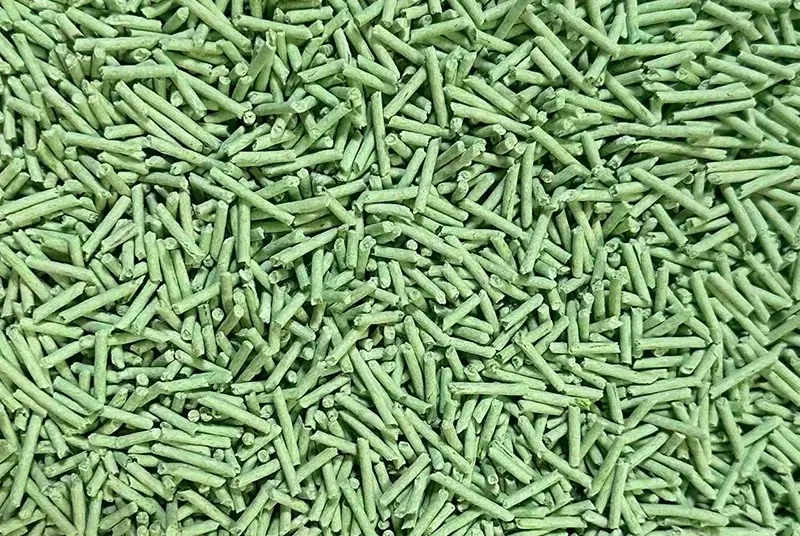
Green Tea Tofu Cat Litter: Odor Control and Natural Freshness
Nov. 03, 2026
Share:

Green tea tofu cat litter gives cat owners a plant-based way to manage odor and daily cleanup. Many homes now look for natural cat litter that is easy to scoop and produces less dust. The main concern is not only the smell of urine and feces, but also the fine dust that can spread across floors and furniture. A good biodegradable cat litter should form a firm clump, control odor, and remain comfortable for cats. Pet owners also want a product that supports simple litter box cleaning. This is why clumping litter made from tofu residue and green tea has become a practical option.
Yes. Green tea tofu cat litter can provide effective odor control when it uses absorbent plant fiber, a stable clumping formula, and suitable green tea ingredients. Its low bulk density, fast liquid absorption, and low-dust design can make daily cleaning easier. However, performance depends on raw material quality, pellet size, moisture control, packaging, and regular litter box maintenance.
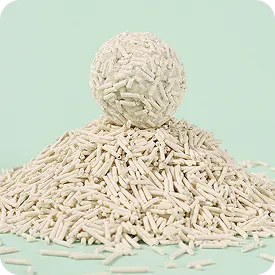
Green tea tofu cat litter is a plant-based litter made mainly from processed soybean residue. Green tea particles or green tea extract are added to support freshness and odor management. Some formulas also contain corn starch, guar gum, cassava starch, or other plant-based binders.
The litter is usually formed into short cylindrical pellets. Common pellet lengths range from 5 to 12 mm. Pellet diameter often ranges from 1.5 to 3.0 mm. These dimensions help the litter absorb liquid while keeping the texture comfortable under a cat's paws.
| Parameter | Typical target | Why it matters |
|---|---|---|
| Pellet length | 5 to 12 mm | Balances absorption, comfort, and screenability |
| Pellet diameter | 1.5 to 3.0 mm | Supports fast liquid contact and easy scooping |
| Moisture content | Usually below 10 percent | Reduces premature clumping during storage |
| Bulk density | About 450 to 650 grams per liter | Determines package weight and pouring behavior |
| Dust content | Quality targets often remain below 0.5 percent | Helps keep floors and air cleaner |
| Liquid absorption | Often 2.5 to 4.5 times its own weight | Controls wetness and supports clump formation |
Tofu fiber has a porous structure. It can draw liquid into the pellet surface and inner pores. Faster absorption reduces the time that urine remains exposed to air. This can limit the spread of ammonia odor.
In a basic laboratory test, a 100 gram sample can be placed in a tray. A measured amount of artificial urine solution is added. The sample is checked after 30 seconds, 60 seconds, and 180 seconds. A well-balanced formula should absorb most of the liquid within the first 60 seconds and form a scoopable mass within 3 to 5 minutes.
Green tea can provide a light plant-based scent. It should not be used to cover a strong odor with heavy perfume. The best formulas combine mild freshness with absorption and regular waste removal.
A firm clump keeps wet material together. This allows the owner to remove the used section without emptying the entire box. A strong clump also reduces the amount of urine that reaches the bottom of the tray.
Odor control depends on time. Removing solid waste once or twice a day and removing wet clumps daily can improve results. No cat litter can replace proper cleaning in a closed or poorly ventilated room.
Sample preparation
Then add a measured liquid load
Then wait for 60 seconds
Then check absorption and clump strength
Then place the sample in a controlled odor test container
Then record odor scores at 1 hour, 6 hours, and 24 hours
Then compare the result with an untreated control sample
Odor testing can use a trained panel with a five-point rating scale. A score of 1 can mean no noticeable odor. A score of 5 can mean very strong odor. For more consistent results, the test room should remain near 20 to 25 C with similar sample mass, tray size, and ventilation.
| Litter type | Odor control | Dust level | Clumping | Biodegradable content | Best feature |
|---|---|---|---|---|---|
| Green tea tofu litter | Good when absorption is fast | Low in a screened formula | Fast and scoopable | High | Plant-based odor control |
| Bentonite clay litter | Good with regular cleaning | Low to high, depending on grade | Usually strong | Low | Dense clumps |
| Silica gel litter | Good moisture control | Usually low | Does not form traditional clumps | Low | Long use between changes |
| Pine litter | Moderate | Low to moderate | Often weak or non-clumping | High | Wood-based material |
| Paper litter | Moderate | Very low | Usually weak | High | Soft texture |
Green tea tofu litter is often selected by owners who want a balance between low dust, quick clumping, and plant-based materials. Clay may provide heavier clumps. Silica gel may last longer in some homes. The best choice depends on the cat's habits, household size, and cleaning schedule.
Tofu litter uses a renewable material from soybean processing. Many formulas also use starch-based binders. This supports the demand for an eco-friendly cat litter with a lower reliance on mineral resources.
Pellets made from plant fiber can produce less airborne dust than poorly processed clay. Low dust depends on screening, pellet strength, transport, and packaging. A practical quality target is less than 0.5 percent dust by weight.
Fast clumping allows the owner to remove only the used litter. This can reduce waste and shorten the cleaning process. Clump strength can be checked with a simple drop test after a three-minute setting time.
Tofu litter often has a lower bulk density than clay. A 6 liter package may weigh about 3 to 4 kilograms, depending on the formula. This can make storage and carrying easier.
Some tofu litters are marketed as flushable. This does not mean that every home plumbing system can handle large amounts of litter. Users should follow local wastewater rules and flush only small amounts when the product label allows it.
Reliable performance starts with controlled production. Petcare product teams can use a written inspection plan for raw materials, pellets, packaging, and finished goods. Each production lot should receive a traceable code.
| Inspection item | Equipment or method | Example acceptance target |
|---|---|---|
| Moisture | Halogen moisture analyzer | Below 10 percent |
| Particle size | Standard test sieves | At least 95 percent within the approved size range |
| Dust | Rotary dust test or controlled sieve test | Below the internal limit, often 0.5 percent |
| Absorption | Measured liquid absorption test | At least 2.5 times sample weight |
| Clump strength | Timed scoop and drop test | Clump remains mostly intact after handling |
| Packaging seal | Visual inspection and seal strength test | No leakage or open seal |
| Odor profile | Controlled sensory panel | No strong chemical or sour odor |
A useful Petcare development program can test at least three pellet sizes, three binder levels, and three green tea inclusion levels. This creates 27 trial combinations before the final formula is selected. Each trial should be checked for absorption, clump strength, dust, odor, and storage stability.
A 12-week pilot can include testing at 25 C and 40 C with controlled humidity. Samples can be checked at weeks 0, 2, 4, 8, and 12. This schedule helps identify moisture migration, odor changes, broken pellets, and package seal problems before market release.
Start with 75 percent old litter and 25 percent green tea tofu litter.
After 3 to 4 days, change to 50 percent old litter and 50 percent new litter.
After another 3 to 4 days, use 25 percent old litter and 75 percent new litter.
Move to 100 percent green tea tofu litter when the cat uses the box normally.
Some cats accept a new litter in one day. Others need two weeks. A gradual change can reduce box avoidance.
Look for clear information about tofu residue, green tea ingredients, binders, fragrance, and additives. Avoid products with an unclear material description.
Manufacturers should be able to explain how dust is measured. A visible dust cloud after pouring is a warning sign.
Fast-clumping tofu cat litter should form a stable mass within a few minutes. If the clump breaks during scooping, the formula may need more binder or longer setting time.
Cats have sensitive noses. A mild green tea scent is usually more suitable than a strong perfume. Stop use if the cat avoids the box or shows signs of irritation.
Moisture can reduce clumping performance. Choose packaging with a strong heat seal and a dry storage instruction.
A single-cat home may need less frequent replacement than a home with two or more cats. Multi-cat homes should use larger boxes, deeper litter, and more frequent waste removal.
No. It can reduce odor when it absorbs urine quickly and forms firm clumps. Daily scooping, proper ventilation, and regular box washing remain important.
Choose a product with a clear ingredient list and no strong perfume. For young kittens, follow veterinary advice and prevent them from eating the litter.
Neither type is best for every cat. Tofu litter offers plant-based materials, low weight, and compostable potential. Clay often provides dense clumps and a familiar texture. Cat preference and household needs should guide the decision.
Some products work with automatic boxes, but pellet size and clump strength must match the machine. Check the equipment instructions before use. A 1.5 to 3.0 mm pellet may pass through some screens but not others.
A package can last from one to four weeks, depending on package size, cat number, litter depth, and cleaning habits. A single cat using a 6 liter package may use less than a two-cat household.
Only flush it if the product label allows it and local rules permit it. Flush small amounts at a time. Do not flush litter in a septic system unless a qualified professional confirms that it is suitable.
Green tea tofu cat litter combines plant-based tofu fiber with the fresh profile of green tea. Its main strengths are fast liquid absorption, firm clumping, low dust potential, light package weight, and biodegradable content. Performance depends on pellet size, moisture level, binder balance, packaging, and daily cleaning. Petcare manufacturers can improve reliability through controlled R and D trials, laboratory testing, production inspection, and storage studies. For cat owners seeking natural odor control and easier cleanup, green tea tofu cat litter is a practical option when the formula is tested and used correctly.
Latest Blog / Insights
Hot Products


Let’s Get Started on Your Cat Litter Journey.