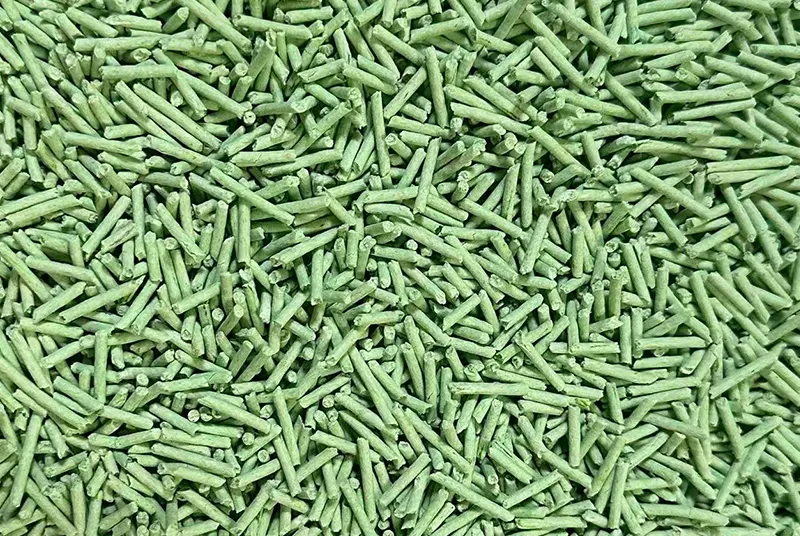
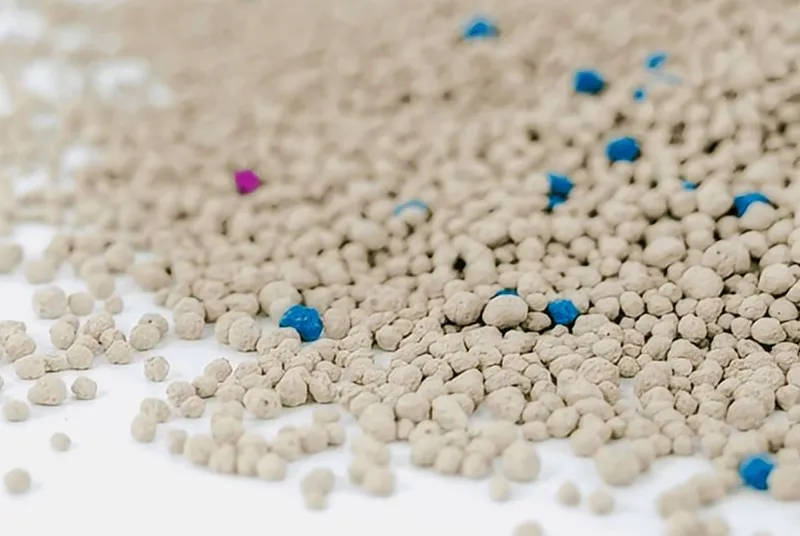
Flushable cat litter, bentonite cat litter, and toilet-safe cat litter are often treated as the same product, but they are not the same in use. The short answer is that ordinary clumping bentonite should not be flushed because it can expand, form hard masses, and block pipes. A specially formulated Flushable Bentonite Cat Litter may disperse more easily, but it is safe only when the product passes suitable water-dispersion tests and the toilet, plumbing, and local wastewater rules allow flushing.
For overseas buyers and distributors, the most important point is simple: the word "flushable" should be supported by test data, clear instructions, and a risk-control plan. Petcare develops cat litter products for international markets with a focus on clumping control, low dust, odor management, and responsible use instructions.

1. Quick Answer: Can Bentonite Cat Litter Be Flushed?
Most standard bentonite cat litter is not suitable for flushing. Bentonite absorbs liquid and swells. When a large clump enters a toilet or narrow drain, it may stay together instead of breaking apart. Repeated flushing can move the material deeper into the pipe, where it may combine with paper, hair, and other waste.
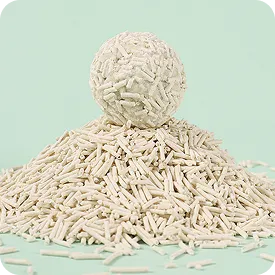
A flushable bentonite product uses a different balance of particle size, binder level, absorbency, and water breakdown speed. It is designed to keep a usable clump in the litter box while breaking into smaller particles after contact with a larger volume of water. This design can reduce blockage risk, but it cannot remove all plumbing risk.
What "flushable" should mean
A responsible flushable claim should describe how quickly the litter disperses, how much material may be flushed, and which systems are excluded. A claim based only on the fact that a litter can pass through one toilet bowl is not enough. A product must also be reviewed for pipe movement, clump separation, wastewater treatment, and user error.
2. Why Ordinary Bentonite Can Block a Toilet
Bentonite is popular because it absorbs moisture and creates firm urine clumps. These same properties can create problems in a drainage system. A litter box needs fast absorption and strong clump retention. A toilet needs waste that separates and moves through water without forming a dense plug. These are different performance goals.
Expansion after contact with water
Sodium bentonite can absorb many times its dry weight in water, depending on mineral grade, particle size, and formulation. In a litter box, expansion is useful. In a narrow toilet trap, expansion can make a compact mass larger and harder to move. A single small scoop may not cause trouble, but repeated flushing increases the chance of accumulation.
Clump strength can become a plumbing risk
Strong clumps are valued by cat owners because they are easy to remove. However, a dense clump may not break apart during one flush. Toilet pipes may have bends, low-flow sections, or partial buildup. The litter can catch in these areas and create a blockage over time.
Toilets are not waste disposal systems for all litter
A toilet is designed mainly for human waste and toilet paper. Flush performance depends on water volume, pipe diameter, pipe slope, drain condition, and municipal treatment design. A modern low-flow toilet may use about 4.8 to 6 liters per flush, while older models may use more. The same litter may move differently in each system.
3. Standard Bentonite vs. Flushable Bentonite
Buyers should separate product type from marketing language. "Bentonite" describes a mineral base. "Flushable" describes a tested use claim. Not every bentonite product has the same dispersion behavior.
| Feature | Standard clumping bentonite | Flushable bentonite formulation | Recommended toilet use |
|---|---|---|---|
| Main design goal | Fast absorption and firm clumps | Usable clumps with faster water separation | Depends on test results |
| Water behavior | May swell and remain dense | Designed to disperse in controlled conditions | Small amounts only |
| Blockage risk | High if flushed regularly | Lower when used as directed, but not zero | Never promise zero risk |
| Best disposal method | Sealed household waste | Follow package and local rules | Do not use with unknown plumbing |
| Septic system suitability | Usually unsuitable | Requires separate review | Check with the system provider |
What product testing should measure
A useful evaluation can include clump breakdown time, particle dispersion, water absorption, sediment formation, pipe passage, and repeat-flush performance. Testing should use realistic water volumes and different toilet designs. Buyers should request the test method, sample amount, water temperature, waiting time, and pass criteria instead of accepting a general "flushable" statement.
4. The Main Toilet Safety Risks
1. Toilet bowl and trap blockage
The toilet trap is a curved section that holds water and prevents sewer gases from entering the room. It is also a restricted passage. Large litter clumps may settle in this area. Warning signs include slow draining, rising water, bubbling sounds, and the need to flush more than once.
2. Drain pipe buildup
A toilet may flush normally at first while material remains in the pipe. Later, additional litter, paper, or grease can attach to the buildup. This may cause a blockage several days or weeks after the first flush. Regular flushing is more risky than a rare, small disposal event.
3. Septic tank problems
Septic systems depend on biological treatment and controlled solids management. Mineral litter does not behave like toilet paper. It may settle, increase sludge, or affect pumping frequency. A flushable claim for a municipal sewer should not automatically be treated as a septic-safe claim.
4. Wastewater and pet waste concerns
Cat feces can contain parasites and pathogens that are not always removed by normal wastewater treatment. Local authorities may advise against flushing pet waste or cat litter. Toxoplasma-related concerns are one reason some regions recommend placing used cat litter in household waste instead of sending it into the sewer.
5. How to Flush Flushable Bentonite Cat Litter More Safely
If flushing is legal and the product instructions allow it, users should reduce the amount, avoid large clumps, and flush separately from toilet paper. The following process is safer than pouring a full scoop into the bowl.
Scoop one small clump -> Break it into smaller pieces -> Wait for the product's recommended water-dispersion time -> Place the pieces in the toilet bowl -> Flush once with adequate water -> Observe drainage -> Stop immediately if water rises or drains slowly
Step 1: Check the local rule
Before flushing, check municipal wastewater guidance, building rules, and septic system instructions. Product packaging should state that local regulations have priority. Do not recommend flushing in areas with old pipes, private septic tanks, frequent drainage problems, or low water pressure.
Step 2: Remove only a small amount
Do not flush the entire litter box contents. Do not flush a large urine clump or a mass mixed with litter. A small, broken portion gives water more contact with the material and reduces the chance of a dense plug.
Step 3: Keep litter and toilet paper separate
Toilet paper absorbs water and can combine with litter particles. Flush the litter separately. Never add wipes, paper towels, plastic liners, or other materials at the same time.
Step 4: Watch the next flush
The water should leave the bowl at its normal speed. If the water rises, drains slowly, or makes a bubbling sound, stop flushing. Using a plunger may not remove a deep litter blockage. A licensed plumber may be needed.
6. Which Disposal Method Is Best?
For many homes, sealed disposal in household waste remains the lowest plumbing risk. Composting is not automatically suitable because used cat litter and feces may require high-temperature treatment. Garden use is also not recommended unless local waste guidance and the product material specifically support it.
| Disposal method | Toilet blockage risk | Suitable for septic systems | Key user instruction |
|---|---|---|---|
| Household waste in a sealed bag | Very low | Not applicable | Follow local waste rules |
| Flush small amounts of tested product | Low to medium | Not automatically suitable | Use only where permitted |
| Flush standard bentonite | High | No | Avoid |
| Home compost or garden disposal | No toilet risk | Not applicable | Usually avoid used cat waste |
7. What Overseas Buyers Should Request from a Manufacturer
Distributors need more than a product sample. They need evidence that supports packaging, advertising, customer service, and market compliance. A clear technical file can also reduce complaints caused by incorrect consumer use.
Recommended product information
Request the bentonite source and formulation description, particle size range, moisture level, clump strength, dust performance, odor control data, and water-dispersion test results. Ask whether the testing covers one flush, repeat flushing, different water volumes, and more than one toilet type.
Recommended warning statements
Packaging should state: flush only small amounts; break large clumps before disposal; never flush a full tray; do not use with septic systems unless approved; keep litter away from children; and stop flushing if drainage slows. These instructions are more useful than a large "flushable" claim without limits.
Market-specific review
Flushability rules differ by country, city, building, and wastewater operator. Buyers should review local labeling requirements and environmental claims before importing. Petcare can support distributor discussions with product specifications and use guidance, but the final claim should match the actual test evidence and target market rules.
8. Common Questions About Flushable Bentonite Cat Litter
Is flushable bentonite safe for old toilets?
It is less suitable for old toilets and older drainage systems. These systems may have narrower pipes, lower flush performance, or existing buildup. Even a tested product should be used cautiously, and household waste disposal is usually the safer choice.
Can I flush a full scoop of litter?
No. A full scoop may create a dense mass that does not disperse quickly. If flushing is allowed, use only the small amount stated on the package. Never flush the whole tray or several days of collected clumps at once.
Is flushable litter safe for septic tanks?
Not automatically. A product may disperse in a municipal sewer but still add unwanted mineral solids to a septic tank. Users should ask the septic service provider before flushing any mineral-based litter.
Does flushable mean environmentally safe?
No. Flushability describes movement through a toilet and pipe under certain conditions. It does not prove that the litter has no environmental impact, that cat waste is accepted by the wastewater system, or that every home can flush it safely.
What is the safest choice for most cat owners?
For the lowest risk of plumbing damage, place used litter in a sealed bag and dispose of it according to local waste rules. For consumers who want a flushable option, choose a product with clear limits, supporting test information, and instructions that match their plumbing conditions.
9. Final Verdict for Buyers and Cat Owners
Flushable bentonite cat litter is not automatically safe for every toilet. Standard bentonite can swell, hold together, and block toilet traps or drain pipes. A specially formulated product can lower this risk through faster dispersion and controlled clumping, but safe use still depends on the amount flushed, toilet design, pipe condition, wastewater rules, and septic status.
The strongest SEO and product message is also the most accurate one: flushable does not mean risk-free. Manufacturers and distributors should support the claim with measurable data, simple instructions, and visible warnings. Petcare recommends a careful, evidence-based approach so cat owners can choose convenient litter disposal without treating every toilet as a waste-processing system.