Easy Clean Cat Litter: Features That Improve Cat Owner Experience
Nov. 23, 2026
Share:
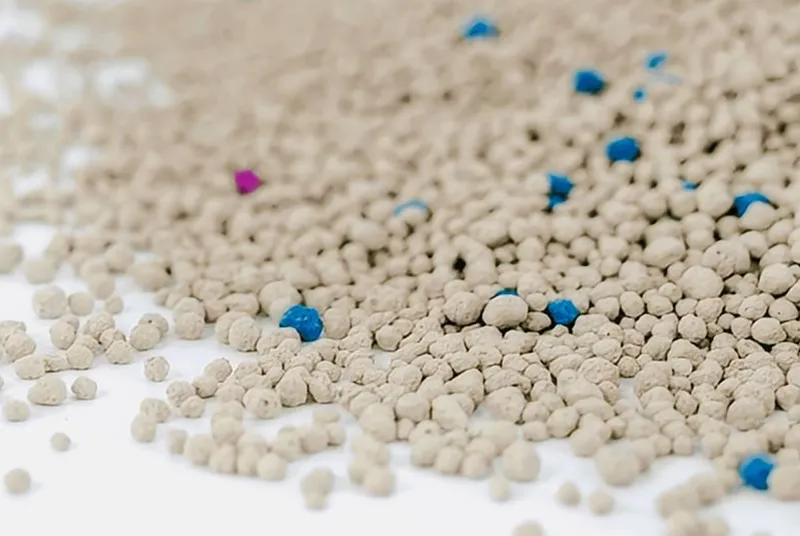
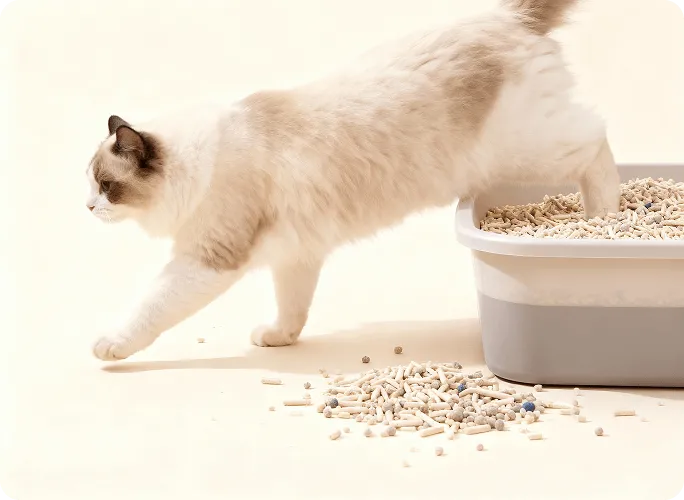
easy clean cat litter helps reduce the time, mess, and odor linked to daily litter box care. Low dust cat litter can keep particles away from floors, furniture, and a cat's breathing space. Cat owners also look for fast clumping, strong odor control, and less cat litter tracking. A litter that forms firm clumps is easier to scoop without removing clean material. Unscented cat litter may suit cats that avoid strong artificial fragrances. The best easy clean cat litter should also support simple daily care in single-cat and multi-cat homes. This guide explains the features, measurements, and cleaning steps that improve the owner experience.
The easiest cat litter to clean forms firm clumps within 5 to 10 minutes, produces low dust during pouring and scooping, controls odor without excessive fragrance, and creates less tracking around the litter box. A practical choice should also have consistent granule size, stable moisture content, simple packaging, and clear quality testing. For many homes, a low dust clumping cat litter with fast absorption offers the best balance between cleaning speed, odor control, and cat acceptance.
Fast clumping is one of the most important features of easy clean cat litter. When liquid is absorbed quickly, it creates a solid mass that can be lifted with less breakage. Broken clumps leave wet pieces behind. These pieces can cause odor and make the litter box harder to maintain.
A useful performance target is a firm clump within 5 to 10 minutes after contact with liquid. The exact time depends on the material, granule size, and liquid volume. A simple product test can use 50 to 60 milliliters of water for each test point. Testers can check the clump at 1, 5, and 10 minutes. The clump should remain together when lifted with a standard scoop.
Dust affects both the cleaning experience and the area around the litter box. Low dust cat litter should create limited visible dust when poured from a height of 30 centimeters and when moved with a scoop.
Manufacturers can evaluate dust with a controlled pour test. A consistent sample weight, such as 500 grams, should be poured into a clean container. The same height and pouring speed should be used for each test. A dust collection chamber or particle counter can provide more consistent results than visual inspection alone.
Quality check example: Test at least three production samples from different batches. Record visible dust, particle readings, and granule breakage. Keep the same sample weight, drop height, and equipment settings.
Granule size affects absorption, tracking, and scoop performance. Very fine particles may increase dust. Very large particles may reduce liquid contact and leave wet areas.
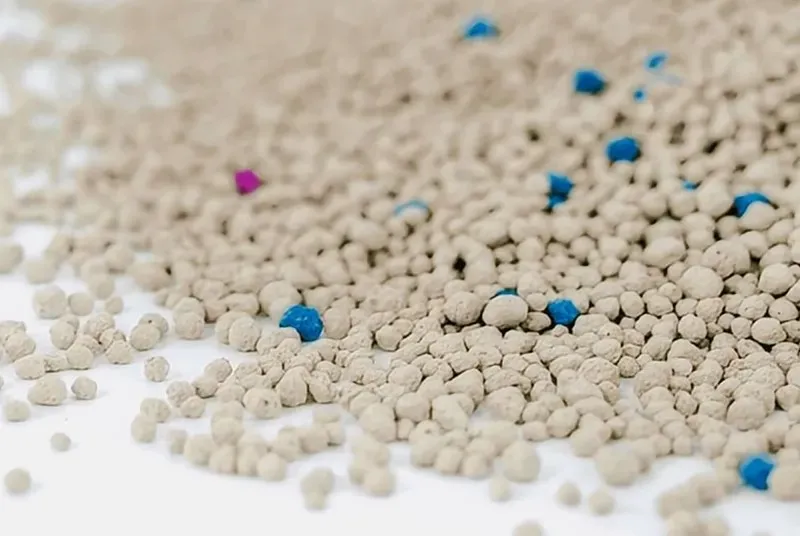
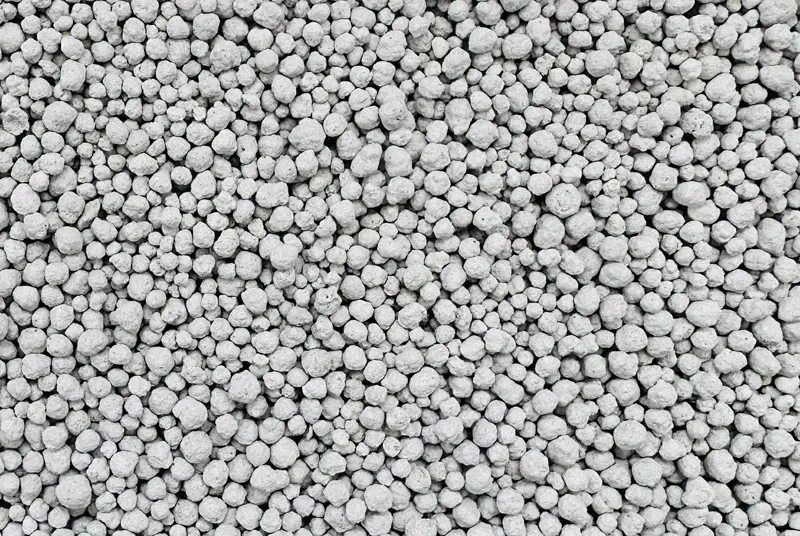
Many clumping products perform well with a controlled particle range of about 0.5 to 2.5 millimeters. This is a product target, not a universal rule. A sieve analysis can separate particles by size. A quality team can weigh each fraction and record the percentage in each range.
| Feature | Useful test target | Owner benefit |
|---|---|---|
| Clumping speed | Firm clump in 5 to 10 minutes | Faster scooping and fewer wet leftovers |
| Granule size | About 0.5 to 2.5 millimeters for many clumping formulas | Better balance between absorption and tracking |
| Moisture content | Set a product-specific limit and verify every batch | More stable weight, flow, and clumping |
| Dust performance | Use a repeatable pour and scoop test | Cleaner floors and less airborne dust |
Odor control cat litter may use mineral absorption, activated carbon, plant-based ingredients, or a combination of materials. The most effective method is to remove urine and feces promptly. A strong fragrance does not replace regular scooping.
For a practical home routine, scoop solid waste and urine clumps at least once per day. Multi-cat homes may need two or more cleaning rounds each day. The litter depth should usually remain between 5 and 8 centimeters, unless the product instructions state a different level.
Tracking happens when granules stick to a cat's paws or remain in the fur. Smaller and lighter particles may travel farther from the box. A textured litter mat can catch loose particles before they spread across the room.
Tracking can be measured with a simple 24-hour test. Place the litter box on a clean mat. Use the same litter amount and the same number of cats or test cycles. Collect and weigh particles outside the mat area. Record the result in grams. This creates a useful comparison between formulas.
A firm clumping cat litter should release from the box surface without scraping when the box is cleaned at the correct interval. Owners should still use a smooth, non-porous litter box. Deep scratches can hold moisture and odor.
For routine care, remove waste daily. Stir the remaining litter only when needed. Replace lost litter to maintain the recommended depth. Wash the box with mild soap and water during a full change. Rinse it well and dry it before adding fresh litter.
| Litter type | Main cleaning benefit | Possible limitation | Best use case |
|---|---|---|---|
| Clay clumping litter | Forms removable urine clumps and supports fast daily scooping | Can create dust or tracking if the formula is not controlled | Owners who want a familiar and efficient clumping system |
| Silica crystal litter | Absorbs liquid and can reduce the need for frequent full changes | Does not create the same type of scoopable clump | Owners who prefer a dry surface and follow product change instructions |
| Plant-based clumping litter | May provide a lighter package and renewable material content | Clump strength and odor performance can vary by formula | Owners seeking natural cat litter options |
| Paper pellet litter | Usually creates less fine dust and is easy to see when soiled | May need more frequent replacement because it does not form firm clumps | Cats or homes that need a low-dust non-clumping option |
| Wood-based litter | Can offer a natural material profile and a light scent | Pellet breakdown may increase cleaning time | Owners who prefer wood-based materials |
Choose clumping litter when fast daily removal is the main goal. Choose a low dust formula when the litter box is near living areas or when dust is a major concern. Choose plant-based or wood-based materials when material preference is important. Regardless of type, check how well the cat accepts the product. A litter that is difficult for the cat to use will not improve the home cleaning routine.
Quality begins before the litter reaches the production line. Inspectors can check incoming materials for moisture, foreign matter, color, odor, and particle size. A moisture analyzer can provide a numerical result within minutes. Sieve equipment can measure the percentage of fine and oversized particles.
Each batch should have a lot number. A traceable lot system connects the raw material, production date, packaging line, and finished product sample. This makes it easier to investigate a complaint or compare performance between batches.
Production controls should include regular checks of mixing time, granule size, filling weight, seal strength, and package appearance. Checkweighers can confirm that bags meet the labeled weight. Metal detection equipment can help identify unwanted metal contamination after processing.
A useful internal control plan may check weight every 30 to 60 minutes during packing. Seal samples can be tested at the start, middle, and end of a production run. The exact inspection frequency should match the product risk and the company's quality system.
Finished litter can be tested for absorption, clump strength, dust, odor performance, tracking, and package durability. A controlled laboratory test should use the same liquid volume, contact time, temperature, scoop type, and sample weight for every comparison.
Petcare can use a structured evaluation form that records each result on a 1 to 5 scale, supported by physical measurements where possible. A stronger development process uses repeated tests across at least three batches. This helps identify whether a result comes from the formula or from normal production variation.
| Quality item | Test method | Record to keep |
|---|---|---|
| Clump strength | Lift the clump after a fixed contact time | Breakage, weight, and test time |
| Absorption | Apply a fixed liquid volume to a fixed sample weight | Absorption time and wet residue |
| Dust | Controlled pour and scoop test | Visible dust and particle readings |
| Tracking | Collect particles outside a defined test area | Collected weight in grams |
| Package strength | Drop, seal, and visual inspection | Leaks, tears, and seal defects |
Prepare the scoop and waste bag
Then inspect the box for wet areas
Then remove solid waste and firm urine clumps
Then check for broken pieces and loose wet litter
Then add fresh litter to restore the correct depth
Then clean the mat and floor around the box
Finally, wash your hands
Change litter gradually over 7 to 10 days. Start with about 25 percent new litter and 75 percent current litter. Increase the new portion every few days if the cat continues to use the box normally.
Keep the box in a quiet location. Avoid sudden changes in box position, litter depth, and cleaning products at the same time. If a cat stops using the box, shows pain, or has a sudden change in urination, contact a veterinarian.
A common veterinary recommendation is one litter box for each cat, plus one extra. This means a home with two cats may need three boxes. More boxes can reduce waiting, territorial conflict, and waste buildup.
| Number of cats | Common starting recommendation | Cleaning note |
|---|---|---|
| One cat | Two boxes | Scoop at least once daily |
| Two cats | Three boxes | Check boxes twice daily if odor builds quickly |
| Three cats | Four boxes | Use several locations and track which boxes are used |
The recommendation is a starting point. Older cats, cats with health problems, and cats with mobility limits may need boxes with lower sides or easier access.
Use one scoop for the litter box and keep it near the box. Set a regular cleaning time. Record how often the box needs topping up and full replacement. If the amount of waste changes suddenly, monitor the cat and seek veterinary advice when necessary.
Look for clear information about litter type, clumping behavior, dust control, scent level, material content, package weight, and disposal instructions. A label should not suggest that a product is flushable unless local plumbing guidance and the product instructions support that use. In many homes, bagged disposal is the safer option.
Choose unscented cat litter for cats that dislike fragrance. Choose a low dust cat litter for homes where dust control is important. Choose a fast clumping formula when quick scooping is the main goal. For kittens, senior cats, and cats with sensitive paws, observe texture and comfort during the transition.
Small apartments may need stronger odor control and better tracking control. Large homes may focus more on package weight and carrying ease. Multi-cat households should review clump strength, absorption capacity, and the number of daily scoops required.
| Owner priority | Feature to seek | Question to ask before buying |
|---|---|---|
| Fast cleaning | Firm clumping in 5 to 10 minutes | Does the clump stay together when lifted? |
| Cleaner floors | Controlled particle size and low tracking | Does the package explain dust or tracking tests? |
| Less odor | Absorption and source odor control | How often should waste be removed? |
| Cat comfort | Low fragrance and suitable texture | Will the cat accept the material and scent? |
| Reliable quality | Lot identification and inspection records | Does the manufacturer provide consistent product information? |
Easy Clean Cat Litter improves the owner experience through firm clumping, fast absorption, low dust, odor control, reduced tracking, and consistent granule size. The best product is not only easy to scoop. It must also be comfortable for the cat and stable from batch to batch. Daily scooping, correct litter depth, a suitable number of boxes, and gradual product changes support better results. Petcare can help buyers evaluate these features by focusing on measurable performance, controlled quality checks, and practical home use. With the right formula and routine, easy clean cat litter can make litter box care faster, cleaner, and more predictable.
Latest Blog / Insights
Hot Products


Let’s Get Started on Your Cat Litter Journey.