Crushed Tofu Cat Litter vs Striped Tofu Cat Litter: Which Is Better?
Oct. 26, 2026
Share:
Choosing between Crushed Tofu Cat Litter and Striped Tofu Cat Litter is not simply a matter of appearance. Granule shape affects clumping speed, odor control, tracking, dust, scooping, storage, and how comfortable the litter feels under a cat's paws. For households comparing products from Petcare and other brands, the better option depends on the cat's habits, the litter box design, and the owner's cleaning priorities.
Most buyers want a practical answer to five questions: Which type controls odor better? Which one forms stronger clumps? Which one tracks less? Which one is safer for kittens and multi-cat homes? Which type provides better value over time? The comparison below addresses those concerns through product parameters, real-use expectations, advantages and disadvantages, and recommendations for different households.
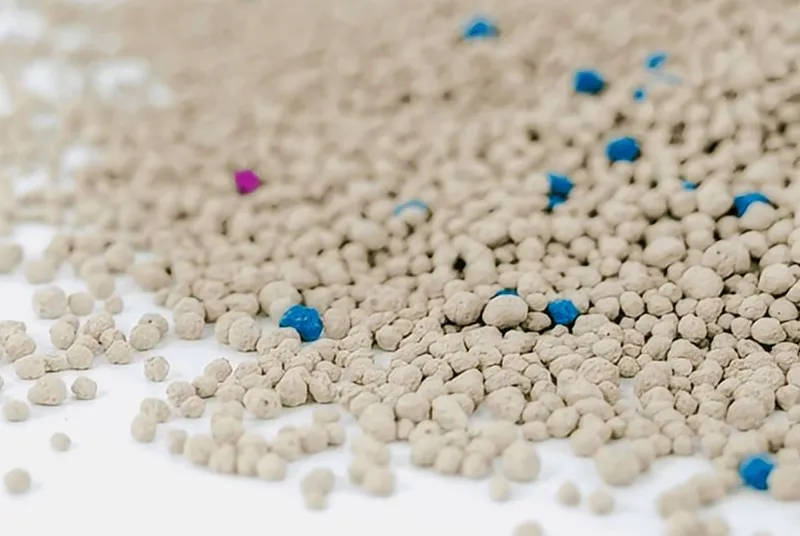
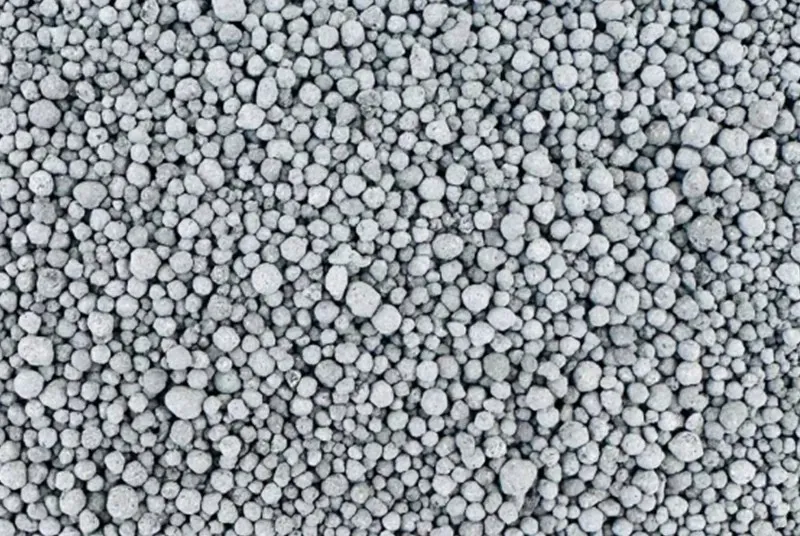
Crushed Tofu Cat Litter is made from tofu-based material processed into short, irregular, or compact granules. The smaller surface pieces usually absorb urine quickly because liquid can spread through many contact points. This design is often chosen by owners who want fast clumping and a familiar granular texture.
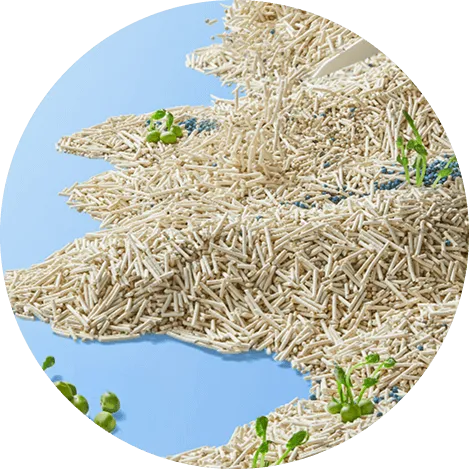
Striped Tofu Cat Litter is formed into longer pieces with visible lines or grooves. The striped surface can help urine move along the particle structure while keeping the pieces larger and easier to pick up. Many owners choose this type because the larger pieces may reduce tracking and make daily cleaning more convenient.
Although particle shape creates meaningful differences, formula quality remains equally important. A poorly made striped product may clump weakly, while a well-formulated crushed product may control odor very effectively. The comparison should therefore consider both shape and the complete product formula.
Packaging photographs do not show how litter behaves after several days of use. Buyers should compare absorption, clump strength, dust, tracking, odor control, flushability claims, and package efficiency. The following table summarizes the usual performance tendencies of the two formats. Actual results can vary according to particle size, additives, moisture level, and manufacturing quality.
| Parameter | Crushed Tofu Cat Litter | Striped Tofu Cat Litter | What Buyers Should Check |
|---|---|---|---|
| Particle shape | Short, compact, or irregular granules | Longer striped or grooved pieces | Whether the cat accepts the texture and whether the scoop fits the granules |
| Liquid absorption | Usually fast because of the smaller contact pieces | Fast when the grooves and internal structure are porous | How quickly the surface becomes dry after urination |
| Clump formation | Often dense and compact | Can form large, easy-to-lift clumps, depending on the formula | Whether clumps stay together during scooping |
| Clump drying time | Usually short, but deep urine may need extra time | May need slightly more time if the strips absorb unevenly | Whether the center remains wet when removed |
| Odor control | Strong when absorption is rapid and odor-control additives are effective | Strong when grooves distribute liquid and the formula includes odor absorbers | Ammonia odor after several hours and overnight use |
| Dust level | Can be low, but crushed fines may create dust if screening is weak | Often appears cleaner, but broken strips can still create fines | Dust during pouring, scooping, and vigorous digging |
| Tracking | Small granules may cling to paws and mat surfaces | Longer pieces may reduce fine tracking, but can still be carried out of the box | Amount found on floors, bedding, and furniture |
| Scoop compatibility | Works with most standard scoops | May require wider openings to prevent clean litter from being removed | Whether the scoop separates clean pieces efficiently |
| Multi-cat performance | Good when clumping and odor control are strong | Good when the box is deep enough and clumps do not break apart | Speed of odor buildup and the number of wet areas per day |
| Flushability | Some products are marketed as flushable | Some products are marketed as flushable | Follow local plumbing rules and the package instructions; never assume all tofu litter is safe to flush |
| Battery life | Not applicable because this is a passive litter product | Not applicable because this is a passive litter product | Do not confuse tofu litter with an automatic litter box or electronic odor-control device |
| Storage stability | Can absorb humidity and form hard pieces if the bag is damaged | Can lose shape or become damp in humid storage conditions | Packaging seal, moisture barrier, and storage instructions |
This table also explains why a single winner is difficult to declare. Crushed granules often have an advantage in rapid absorption and familiar paw feel, while striped pieces often have an advantage in handling and tracking control. The correct choice depends on which problem causes the most inconvenience in the home.
In actual use, Crushed Tofu Cat Litter generally absorbs urine quickly and produces compact clumps. This can make it easy to remove wet areas without disturbing the remaining litter. However, very small pieces may pass through large scoop openings, causing more clean litter to be discarded.
Striped Tofu Cat Litter tends to produce larger pieces that are easy to see and lift. The grooves may help liquid spread through the particle, but the result depends on how deeply the cat urinates and how long the clump is left before scooping. If the clump is removed too early, the center may still be soft.
Neither shape can replace regular maintenance. Crushed granules may control urine odor effectively because they absorb liquid quickly and limit exposed moisture. Striped particles can perform similarly when their grooves distribute urine instead of allowing it to pool at the bottom of the box.
In a one-cat household, both types can provide good odor control if the litter depth is correct and clumps are removed at least once a day. In a multi-cat household, the litter box ratio, ventilation, and cleaning schedule usually have a greater effect than the particle shape alone.
Small crushed particles may be carried farther because they can remain between paw pads or cling to fur. This is especially noticeable with long-haired cats and open litter boxes. A litter mat can reduce the problem, but it cannot eliminate it completely.
Striped particles may leave fewer fine grains around the box because their larger shape is less likely to remain attached to paws. However, the longer pieces can still be kicked out during digging. A covered box may reduce visible tracking, although some cats dislike covered spaces and may hold urine if the box feels uncomfortable.
Some comparison searches include battery life because users may also be researching automatic litter boxes, self-cleaning systems, or electronic odor-control devices. Crushed Tofu Cat Litter and Striped Tofu Cat Litter do not contain batteries and do not require electricity. Their practical stability comes from moisture resistance, clump strength, packaging quality, and consistent granule formation.
If an automatic litter box is being used, check whether the manufacturer permits tofu litter and whether the particle size works with the rotating drum, rake, or waste separation system. In that situation, litter compatibility and mechanical reliability matter more than battery life alone.
As the comparison becomes more practical, the choice is less about which product looks more advanced and more about which drawbacks the household can manage. A small amount of tracking may be acceptable if the cat strongly prefers crushed granules. Conversely, a slightly slower clump may be worthwhile if the owner needs cleaner floors and easier lifting.
Crushed Tofu Cat Litter is often the safer starting point for cats transitioning from clay, fine wood, or other small-grain litter. The familiar texture may reduce refusal, inappropriate urination, or excessive digging caused by an unfamiliar surface.
It may also suit owners who scoop frequently and want clumps to form quickly. This is particularly useful for small apartments where litter box odors are noticed quickly and for households that keep the box in a bathroom or utility room.
Striped Tofu Cat Litter may be a better fit for households where litter is frequently found on floors, sofas, or bedding. The longer structure can make the litter easier to collect from the box and may reduce the amount of fine material carried on paws.
It is also worth considering for owners who prefer visible, larger clumps and have a scoop with openings designed for long particles. Introduce it gradually if the cat has previously used a fine-grain litter.
Cats can reject a new litter because of texture, fragrance, dust, or a sudden change in smell. A gradual transition protects litter box habits and makes it easier to identify whether the problem is particle shape or formula quality.
Buyers often see a striped shape and assume it will automatically track less, or see crushed particles and assume they will always clump better. These assumptions are not reliable without checking the full formula and manufacturing consistency.
A low-priced bag is not necessarily economical if it produces weak clumps, absorbs slowly, or causes large amounts of clean litter to be thrown away. A more useful calculation includes the purchase price, replacement frequency, discarded clean litter, tracking cleanup, and odor-control performance.
For example, Crushed Tofu Cat Litter may offer good value when its dense clumps reduce moisture spread. Striped Tofu Cat Litter may offer better household value when reduced tracking saves cleaning time and protects floors. The best financial choice is the product that remains stable and usable throughout the bag.
Tofu litter is plant-based, but plant-based does not mean every product should be treated as edible or automatically safe for every cat. Prevent kittens and animals from consuming large quantities, avoid strongly perfumed products for sensitive cats, and seek veterinary advice if ingestion, coughing, vomiting, or unusual litter box behavior occurs.
When two types seem similar, a controlled home test gives more useful information than packaging claims. Use the same litter box size, litter depth, cleaning schedule, and number of cats for each trial. Avoid changing food, deodorizer, or litter box location at the same time.
A litter that performs well on paper is not a good choice if the cat refuses to use it. Watch for normal digging, covering, relaxed posture, regular box visits, and consistent urine and feces patterns. Avoid forcing a cat to use a litter it clearly dislikes.
For multi-cat homes, test whether every cat accepts the product. One cat may prefer crushed granules while another may tolerate striped particles. Providing multiple boxes can reveal individual preferences before a complete household switch.
Choose Crushed Tofu Cat Litter when your main priorities are rapid absorption, compact clumps, familiar texture, and easy compatibility with standard scoops. It is a practical option for cats that prefer fine particles and for owners who clean the litter box frequently.
Choose Striped Tofu Cat Litter when your main priorities are easier lifting, larger visible particles, and a potentially cleaner area around the box. It is especially suitable for households that already use a large scoop and want to reduce fine litter carried through the home.
When comparing Petcare products, focus on the complete use experience: particle consistency, dust level, clump stability, odor performance, packaging, and cat acceptance. A reliable litter should perform consistently from the first scoop to the last portion of the bag.
In the end, there is no universal winner between Crushed Tofu Cat Litter and Striped Tofu Cat Litter. Crushed granules are generally the stronger starting point for fast absorption and familiar texture, while striped particles are often the stronger starting point for convenient handling and tracking control. Petcare buyers can make the most confident decision by matching the litter shape to the cat's preference, the litter box equipment, and the household's most persistent cleaning problem.
Latest Blog / Insights
Hot Products


Let’s Get Started on Your Cat Litter Journey.